Showing posts with label David Gregory. Show all posts

Tuesday, May 3, 2011

Osama: Obama, Democrats - Hypocrites

I've had enough of the Democrats and the Leftists strutting around praising Obama for HIS success in achieving the death of Osama bin Laden.

For years, they attacked and attempted to undermine President George W. Bush and the Bush administration. They vehemently objected to the methods utilized to deal with the terrorist threat and protect us.

Their assault was relentless, accusing President Bush and Vice President Cheney of being war criminals.

WATERBOARDING.

ENHANCED INTERROGATION.

SECRET PRISONS.

WARRANTLESS WIRETAPPING.

Obama was adamant about closing Guantanamo Bay.

He and the Democrats opposed the very methods that allowed for bin Laden to be killed.

Here's a sampling of video, via Mark Levin:


FORMER Sen. Russ Feingold lies and rails against collecting intelligence.


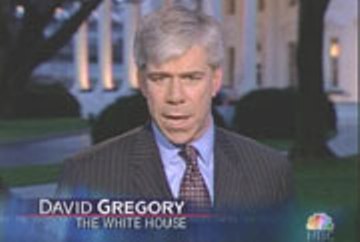
David Gregory lectures President Bush on the interrogation bill.


Matt Lauer accuses President Bush of using illegal methods to obtain information.


Obama signs his first executive order - to close Gitmo.

OBAMA:
Guantanamo will be closed no later than one year from now.

Of course, that didn't happen.


Dick Cheney defends President Bush and the interrogation methods used to protect the country. This is must-see.


Obama chastises Dick Cheney for objecting to Obama's plan to close Gitmo.


Obama says he "fundamentally disagrees with Dick Cheney."

So, Obama and his Democrat comrades mercilessly attacked the Bush administration, while now they're hoping to take sole credit for getting bin Laden, and wallowing in the news of his death.

It's absurd.

It's a disgrace.

Democrat Gwen Moore wanted President Bush impeached.

Yesterday, she touted the mission, military action within the borders of a sovereign nation. She didn't call for Obama's impeachment because he gave the kill order to get bin Laden in Pakistan.

Moore's statement:

"I applaud our military, our President, and his national security team for ridding the world of the dark presence of Osama bin Laden. He has held the world captive, and his death ends a tragic chapter in a horror story where extremists target innocent civilians with murder, mayhem and fear.

"Bin Laden’s death brings a sense of relief to the families who lost loved ones on 9/11 and indeed every American. Our global partners and allies and peoples all over the world – regardless of race, creed, color, country, or religion – stand vigilant and unified with us today to rebuke this extremism and break free from the bondage of fear."

Personally, I don't feel a sense of relief. I'm glad bin Laden has been brought to justice, but I don't feel safer at all. This war, and it is a war, is not over.

In sum, Obama and the Democrats are shameless in their hypocrisy.

President Bush and Vice President Cheney have been vindicated.

Without their efforts and their tireless battle against Obama and the Democrats, bin Laden would be alive today; and Obama wouldn't be planning a 2012 election photo-op at Ground Zero on Thursday.

_________________

UPDATE: During the afternoon White House press briefing, Jay Carney insists that Obama hasn't changed his mind about the Bush policy interrogation methods.

Of course, Obama kept the vast majority of those policies in place, reneging on his promises.

Tuesday, January 22, 2008

David Gregory and Jay Leno

The writers' strike is really taking a toll on the Tonight Show's guest lineup.

NBC is dragging out any of its news division personalities that it considers to be even remotely amusing.

Tonight, Jay Leno filled time with David Gregory (aka Stretch).

Leno and Gregory talking presidential primary politics -- Wow. How entertaining. I'm thrilled.

They discussed the "nastiness" between Hillary Clinton and Barack Obama in Monday's debate.

Leno asked if Obama's "Wal-Mart" jab and Hillary's "Rezko, slum landlord business" remark had any truth to them.

LENO: Both of them seemed like such exaggerations. Is there any truth to either of those arguments?

GREGORY: Well, you know, in Obama's case, he did have some dealings with a guy who had some shady investments, this guy Rezko; and he returned those contributions. You know, there's usually grains of truth that they get sort of, you know, extrapolated, and they become magnified. And it's the heat of battle right now.

After a clip of Hillary and Obama from the debate, they babbled a bit more about the primaries.

Gregory didn't address Obama's Wal-Mart shot at all, and he completely dismissed the Rezko (or as CQ Transcripts prefers: "Resco") stuff as no big deal.

What a partisan hack!

They also talked about President Bush.

Gregory said, "He's a total smart aleck."

Leno said, "I'll tell you something I never told anybody before."

Then Leno proceeded to tell the story of when he was attending the White House Correspondents' Dinner and as he passed President Bush to get to the podium, "somebody gooses me."

He said it had to be the work of the President.

Leno said, "It just struck me as so odd... I'm flattered I guess."

What an idiot!

Leno has
told that exact same story before, almost word for word, same set up.

He told it when Matt Lauer was a guest on the Tonight Show, on January 16, 2007.

Gregory then went on to tell a story about being in Poland, reporting on the President.

Gregory said that the President "goes out of his way to say, 'Gregory, you're lookin' mighty nice today by the way.' What are you supposed to do with that? 'Well, thank you. You look kinda good, too, actually.' "

Yeah. Ha, ha. President Bush is a weirdo.

God, I hope this writers' strike ends soon.

Sunday, December 30, 2007

David Gregory: Lord of the Dance


I think David Gregory learned his moves from Gene Gene, the Dancing Machine.

Gene dances better. He'd probably be a better journalist, too.

Thursday, July 12, 2007

Bush Press Conference on Iraq Benchmarks

This morning, President Bush held a news conference that ran about an hour. He started out with a heartfelt statement on the death of Ladybird Johnson.

Before taking questions, he discussed the war in Iraq and the benchmark report, areas of progress and lack of progress.

The focus of the news conference can be summed in three words --- IRAQ, IRAQ, IRAQ.


Some observations:

---Someone should hold a retirement party for Helen Thomas.

---The press was especially hostile and combative. The first four questions were phrased in a condescending, "Why can't you understand?" manner. I stopped counting after that.

---Was this a news conference with members of the press or a meeting with the Michael Moore fan club?

---Martha Raddatz is a major league whiner, asking Bush to speculate on what David Petraeus' assessment of the situation in Iraq will be.

---Cheerleading for the Dems, Jim Axelrod of CBS asked if Bush was concerned that Congress would take away some of his powers as Commander in Chief by passing legislation. He didn't seem to realize that he was talking about Congress overstepping its powers granted under the Constitution.

---The shameless David Gregory referenced a Washington Post column that called Bush stubborn. In a follow-up, Gregory asked if Bush thinks he's being realistic. What a stupid question!

---Shrill Sheryl Stolberg of The New York Times interrupted Bush while he was in the middle of a sentence. Very inappropriate.

---Mike Abramowitz of The Washington Post was the first and only person to bring up Scooter Libby. He asked about the "morality" of someone in Bush's administration leaking the name of a covert CIA agent. It wasn't a question. It was a sermon.

---Wendell Goler of FOX asked about troop levels. Bush said that the generals all told him they had what they needed.

---Bush is as committed as ever to protecting the homeland and defeating terrorists and tyrants that wish to do us harm. He didn't seem embattled or beaten.

---Mark Silva of The Chicago Tribune asked what Bush's gut is telling him, referencing Michael Chertoff's remark about his gut feeling that a terrorist attack in the U.S. is near. Bush responded by saying that his gut tells him al Qaeda wants to hit us again. Silva's self-serving question gave Bush the opportunity to speak quite eloquently on freedom and the hope for peace in the Middle East.

---Ed Chen of Bloomberg News asked, "How hard is it for you to conduct the war without popular support?" He basically accused Bush of undermining the "essence of Democracy." Bush responded with poise and class.


---Breaking with form, after Bush ended the news conference and was walking out of the room when he actually returned to the podium to respond to a question yelled out by Martha Raddatz. Bush said that al Qaeda is NOT as strong as it was prior to 9/11. They are still a serious threat, but they are weaker today than they were in 2001.

---It doesn't bother me at all when people disagree, and disagree strongly, with President Bush. It bothers me greatly when they paint him as heartless and clueless.

---President Bush is a patient, principled, decent man.


________________________

Transcript

Sunday, April 22, 2007

Shifty Chuck Schumer

Are Harry Reid and Chuck Schumer Democrats or Americans first?

I think it's clear.

They put party before principle.

They put personal political opportunity ahead of the good of the nation.


There is no question that Dems hope to make political hay in Iraq.


This morning on FOX News Sunday, I caught the very end of a segment with Chuck Schumer and Arlen Specter.

Chris Wallace was asking Schumer to comment on Harry Reid's
comment: "I believe ... that this war is lost."

Schumer was an absolute buffoon, trying to explain that Reid didn't really mean that the war is lost.

He tried to say that Dems aren't about throwing their hands up in surrender.

Schumer said that if the mission is redefined, if it becomes just a series of small operations targeting al Qaeda in Iraq, then the war is not lost.

He floundered around, insisting that Reid meant the war as it's now defined is lost, but he never meant to say that the war is lost.

Schumer did more dodging and lame rationalizing than Bill Clinton at his slickest.

Wallace challenged Schumer with his own words as well as Reid's. He questioned whether it was appropriate for Dems to be attempting to capitalize politically on the war in Iraq.

For instance:

Reid: We're going to pick up Senate seats as a result of this war.

Schumer: Look at the poll numbers of Republican senators, and the war in Iraq is a lead weight attached to their ankles.

Schumer brushed it off.

Specter rather impotently called Schumer on his hypocrisy. It wasn't much of a rebuttal, but at least he didn't just sit there while Schumer played semantical games.

Schumer claimed that the Dems are pro-victory in Iraq.

That, of course, isn't the case.

Schumer has made the Dems' intentions very clear.

Look at the poll numbers of Republican senators, and the war in Iraq is a lead weight attached to their ankles. They know that, and we've just been at this a couple of months and we're going to keep at it. It's not an accident that the ones who are squirming the most are the ones who are up in '08.

Defeat in Iraq is in the Dems' self-interest.

How can they be on the same page as America's enemies?

How can they live with themselves?

Seriously. It's nauseating.

______________________________

On another Sunday morning show note:

I want to watch the podcast of today's Meet the Press.

A number of guests were on the program to discuss the shootings on the Virginia Tech campus. University president Charles Steger was interviewed.

Did Tim Russert bring up the Cho "manifesto" and NBC's role in promoting it?

I'd like to know.

I only saw a little of the roundtable discussion, including panel members Doris Kearns Goodwin, David Gregory, Jon Meacham, and Pete Williams. Russert did launch the Virginia Tech topic. I heard a few bits about gun control and Seung-Hui Cho's "manifesto," but I didn't hear the NBC group talk about NBC's disgraceful glorification of the killer.

Perhaps I missed it.

I saw enough to notice that Doris Kearns Goodwin had work done on her eyes. She never struck me as the type that would do that.

Kenny Rogers, yes. Kearns Goodwin, no.

Thursday, February 15, 2007

Honorary Iranians David Gregory and Ed Henry

Although it's been two months since President Bush held a news conference, he was in top form yesterday.

The usual suspects of the White House press corps behaved the way they usually do -- acting as mouthpieces for our enemies and doing the bidding of those wishing us harm.

Naturally, David Gregory was a standout of stupidity. He pressed the president on the administration's assertion that Iran is supplying IEDs being used to harm our troops in Iraq.

Q = David Gregory


Q Thank you, sir. I'd like to follow on Iran. Critics say that you are using the same quality of intelligence about Iran that you used to make the case for war in Iraq, specifically about WMD that turned out to be wrong, and that you are doing that to make a case for war against Iran. Is that the case?

THE PRESIDENT: I can say with certainty that the Quds force, a part of the Iranian government, has provided these sophisticated IEDs that have harmed our troops. And I'd like to repeat, I do not know whether or not the Quds force was ordered from the top echelons of government. But my point is what's worse -- them ordering it and it happening, or them not ordering it and it happening? And so we will continue to protect our troops.

David, our strategy is comprehensive in order to resolve problems that will affect our own peace and the peace in the world. And the biggest problem I see is the Iranians' desire to have a nuclear weapon. As you know, we've been dealing with this issue ever since you've been covering me, and pretty much ever since I've been the President. And we've made it very clear to the Iranians that if they would like to have a dialogue with the United States, there needs to be a verifiable suspension of their program. I would hope that they would do that. I would like to be at the -- have been given a chance for us to explain that we have no desire to harm the Iranian people.

But my focus is on making sure that this weapon is dealt with, the program is dealt with in a constructive, peaceful way. And we'll continue to work toward achieving our common objective with other nations in the world in a peaceful way.

Sheryl.

Q -- using faulty intelligence to provoke Iran?

THE PRESIDENT: No, I heard your question, and I told you, I was confident that the Quds force, a part of the Iranian government, was providing weaponry into Iraq. And to say it is provoking Iran is just a wrong way to characterize the Commander-in-Chief's decision to do what is necessary to protect our soldiers in harm's way. And I will continue to do so.

Gregory is so combative.

After President Bush fully answered Gregory's idiotic, loaded question, he was off mike as he continued to harass the president.

What an egomaniac!

He seems to get off by taking on the leader of the Free World and treating him like a peon.

"Critics say..."

Yeah, critics like the NBC News lib brigade -- Gregory, Brian Williams, and Tim Russert, to name a few.

Gregory charged the President with using faulty intelligence about the IEDs to provoke Iran.

Good grief.

It's as if Gregory intended to suck up to Mahmoud Ahmadinejad, anti-Semite and Holocaust denier.

I'm not suggesting that Gregory should be a cheerleader for Bush and the United States, but he shouldn't be an advocate for Ahmadinejad and the Quds force.

A while later, Ed Henry of CNN took up where Gregory left off.

Q = Ed Henry


Q Thank you, Mr. President. I want to follow up on Iran one more time. You saying today that you do not know if senior members of the Iranian government are, in fact, behind these explosives -- that contradicts what U.S. officials said in Baghdad on Sunday. They said the highest levels of the Iranian government were behind this. It also -- it seems to square with what General Pace has been saying, but contradicts with what your own press secretary said yesterday.

THE PRESIDENT: Can I -- let me -- I can't say it more plainly: there are weapons in Iraq that are harming U.S. troops because of the Quds force. And as you know, I hope, that the Quds force is a part of the Iranian government. Whether Ahmadinejad ordered the Quds force to do this, I don't think we know. But we do know that they're there, and I intend to do something about it. And I've asked our commanders to do something about it. And we're going to protect our troops.

Q But given some of contradictions, Mr. President --

THE PRESIDENT: There's no contradiction that the weapons are there and they were provided by the Quds force, Ed.

Q What assurances can you give the American people that the intelligence this time will be accurate?

THE PRESIDENT: Ed, we know they're there, we know they're provided by the Quds force. We know the Quds force is a part of the Iranian government. I don't think we know who picked up the phone and said to the Quds force, go do this, but we know it's a vital part of the Iranian government.

What matters is, is that we're responding. The idea that somehow we're manufacturing the idea that the Iranians are providing IEDs is preposterous, Ed. My job is to protect our troops. And when we find devices that are in that country that are hurting our troops, we're going to do something about it, pure and simple.

Now David says, does this mean you're trying to have a pretext for war? No. It means I'm trying to protect our troops. That's what that means. And that's what the family members of our soldiers expect the Commander-in-Chief and those responsible for -- responsible for our troops on the ground. And we'll continue do so.

The President was exceedingly patient with these buffoons.

Gregory and Henry were accusing the President of dispensing outright lies in order to the lay the groundwork for war with Iran.

Both Gregory and Henry appear to be more concerned with protecting the "good name" of Iran, the nation supplying IEDs to kill our troops than with protecting our troops from harm.

They assume that President Bush is lying, or they want you to think that he is.

Their news conference performance reveals that they consider him guilty until proven innocent. Doesn't everybody?

These two aren't disinterested, objective members of the press. They're anti-Bush shills, champions of the Left. It seems they would rather stand shoulder to shoulder with Ahmadinejad than President Bush.

I think their pro-enemy slant may stem from their frustration over Patrick Fitzgerald's failed investigation. They so badly wanted Karl Rove and Vice President Cheney to be tarred and feathered, but that didn't work out.

I guess that has to hurt. They're deranged.


Their upset manifests itself in conspiracy theories and irrationality -- the libs' modus operandi.

Pathetic.

Friday, September 15, 2006

Gregory's Presidential News Conference Performance

At this morning's news conference, President Bush was confident, strong in his convictions, humorous, and above all, in control.

He convincingly explained the importance for Congress to give interrogators of terrorists the tools and protections they need so they can effectively glean information from the bad guys that will aid in the effort to keep the American people and our allies safe.

For the most part, the members of the press behaved respectfully -- for the most part.

David Gregory did not.

He's had a history of
run-ins with presidential press secretaries Tony Snow and Scott McClellan.

Today, Stretch acted like a combative buffoon with the President.

To start off, when President Bush called on him, Gregory couldn't stand up. He was tethered, probably because he was already wearing his NBC mic. He struggled to free himself, digging under his jacket and going through a series of "gyrations," as the President put it, in order to stand.

It was an awkward moment, but no big deal. He was tangled up and looked silly on national TV, but that could happen to anyone wired for sound I guess.

The real problem came when Gregory started asking his QUESTIONS.

Other reporters were willing to ask their QUESTION and respectfully listen to the President's answer.

Gregory, on the other hand, kept interrupting the President.

TWICE the President said, "Next man," to cue the next question. Gregory wouldn't shut up.

When Bush refused to recognize Gregory any longer, he noted that it took as long for him to get through his question as it took for Gregory to "unravel," referring to the opening incident.

I thought that was a great choice of words.

Gregory definitely became unraveled at the news conference. In general, he seems unraveled.

Here's the exchange.

Q = David Gregory

THE PRESIDENT: ...Dave. He's back.

Q Sorry, I've got to get disentangled --

THE PRESIDENT: Would you like me the go to somebody else here, until you -- (laughter.)

Q Sorry.

THE PRESIDENT: But take your time, please. (Laughter.)

Q I really apologize for that. Anyway --

THE PRESIDENT: I must say, having gone through those gyrations, you're looking beautiful today, Dave. (Laughter.)

Q Mr. President, critics of your proposed bill on interrogation rules say there's another important test -- these critics include John McCain, who you've mentioned several times this morning -- and that test is this: If a CIA officer, paramilitary or special operations soldier from the United States were captured in Iran or North Korea, and they were roughed up, and those governments said, well, they were interrogated in accordance with our interpretation of the Geneva Conventions, and then they were put on trial and they were convicted based on secret evidence that they were not able to see, how would you react to that, as Commander-in-Chief?

THE PRESIDENT: David, my reaction is, is that if the nations such as those you named, adopted the standards within the Detainee Detention Act, the world would be better. That's my reaction. We're trying to clarify law. We're trying to set high standards, not ambiguous standards.

And let me just repeat, Dave, we can debate this issue all we want, but the practical matter is, if our professionals don't have clear standards in the law, the program is not going to go forward. You cannot ask a young intelligence officer to violate the law. And they're not going to. They -- let me finish, please -- they will not violate the law. You can ask this question all you want, but the bottom line is -- and the American people have got to understand this -- that this program won't go forward; if there is vague standards applied, like those in Common Article III from the Geneva Convention, it's just not going to go forward. You can't ask a young professional on the front line of protecting this country to violate law.

Now, I know they said they're not going to prosecute them. Think about that: Go ahead and violate it, we won't prosecute you. These people aren't going to do that, Dave. Now, we can justify anything you want and bring up this example or that example, I'm just telling you the bottom line, and that's why this debate is important, and it's a vital debate.

Now, perhaps some in Congress don't think the program is important. That's fine. I don't know if they do or don't. I think it's vital, and I have the obligation to make sure that our professionals who I would ask to go conduct interrogations to find out what might be happening or who might be coming to this country, I got to give them the tools they need. And that is clear law.

Q But sir, this is an important point, and I think it depends --

THE PRESIDENT: The point I just made is the most important point.

Q Okay.

THE PRESIDENT: And that is the program is not going forward. David, you can give a hypothetical about North Korea, or any other country, the point is that the program is not going to go forward if our professionals do not have clarity in the law. And the best way to provide clarity in the law is to make sure the Detainee Treatment Act is the crux of the law. That's how we define Common Article III, and it sets a good standard for the countries that you just talked about.

Next man.

Q No, but wait a second, I think this is an important point --

THE PRESIDENT: I know you think it's an important point. (Laughter.)

Q Sir, with respect, if other countries interpret the Geneva Conventions as they see fit -- as they see fit -- you're saying that you'd be okay with that?

THE PRESIDENT: I am saying that I would hope that they would adopt the same standards we adopt; and that by clarifying Article III, we make it stronger, we make it clearer, we make it definite.

And I will tell you again, David, you can ask every hypothetical you want, but the American people have got to know the facts. And the bottom line is simple: If Congress passes a law that does not clarify the rules, if they do not do that, the program is not going forward.

Q This will not endanger U.S. troops, in your --

THE PRESIDENT: Next man.

Q This will not endanger U.S. troops --

THE PRESIDENT: David, next man, please. Thank you. It took you a long time to unravel, and it took you a long time to ask your question.

No other member of the press behaved the way Gregory did.

The guy is an embarrassment and utterly unprofessional.

President Bush handled Gregory's foolishness masterfully.


The President also had some funny yet biting comments for The New York Times and The Washington Post.

For instance:


THE PRESIDENT: Let's see, New York Times, Sheryl.

Q Hi, Mr. President.

THE PRESIDENT: Fine. How are you doing?

Q I'm well today, thank you. (Laughter.)

THE PRESIDENT: Did you start with, hi, Mr. President?

Q Hello, Mr. President.

THE PRESIDENT: Okay, that's fine. Either way, that's always a friendly greeting, thank you.

Q We're a friendly newspaper.

THE PRESIDENT: Yes. (Laughter.) Let me just say, I'd hate to see unfriendly. (Laughter.)

All in all, President Bush had a fantastic news conference.

When he meets the press and gets the opportunity to speak to the American public in a back and forth like that, he is at his best.

Complete Transcript

Tuesday, March 21, 2006

Pink Ties

What with the President's news conference this morning, there's a lot to discuss. Before getting to that, let's talk about Today.

First, wardrobe.


David Gregory was subbing this morning, and what was the chatty, nice guy Stretch wearing? A pink tie.

I'll be waiting for Robin Givhan to write an analysis of the significance of Gregory's tie. Remember when she wrote
an entire column about Vice President Cheney's pink tie ?

She wrote:


It was intriguing to see Cheney in pink. He has never given the impression of being the sort of gentleman who would get involved with pastels, being neither a preppy nor a dandy nor a man willing to give five seconds' worth of thought to the topic of "style."

...Cheney's pink four-in-hand registered in the manner of pigtails on a gangsta rapper. In the parlance of hip-hop, the look is full of macho swagger and the not-so-subtle suggestion that even with the hairdo of a pre-adolescent girl, the rapper is still the toughest thing standing in the room. The incongruous sartorial flourish is a display of irony and confidence.

Whether he intended it to do so or not, Cheney's pink tie came across as a mocking nod to the culture's well-trod -- and often absurd -- path to forgiveness after a public debacle: Pass through the valley of silence. Turn right at the big pit of self-righteousness. Wallow in spotlit contrition. Be sure not to look sweaty and shifty-eyed on camera. ("Oprah" appearance optional.)


I wonder. Did Gregory's tie serve the same purpose? Was he mockingly asking the public for forgiveness?

I think the whole pink tie premise is absurd, but the libs seem to think it's a signal. Thus, I'll be eagerly anticipating Givhan's dissection of Gregory's neckwear.

In addition to wardrobe issues,
Newsbusters comes through with a transcript of Laura Ingraham's smackdown of Gregory and James Carville. (Note: Carville also is partial to pink -- shirts, ties, and I suppose underwear.)

Laura easily took them both out, and got in a great swipe at Matt Lauer and the tired "Where In The World Is Matt Lauer?" Today sweeps tradition.

The pink tie didn't help soften or smooth out Gregory's prickliness. Neither did the perky Today setting.

Gregory's image as the snippy, whiny, over-bearing, self-important guy can't be transformed by a pink tie and a change of scenery. It will take a much more dramatic makeover, nothing short of a personality transplant.

Tuesday, March 14, 2006

Gregory in a Snit

The snippy David Gregory continues to badger White House press secretary Scott McClellan. The man is in a permanent snit. At least he is when he plants himself in the press room.

At Monday's briefing, Gregory added more support to my theory that he is the most annoying, overbearing, ill-mannered member of the WH press corps, with the exception of Helen Thomas.


Transcript

Q = David Gregory


Q Scott, can I ask you about the speech? You say that there's a lot of progress being made, but there's more work to do. When you say that speaking for the President, it sounds like he's dangerously out of touch with public opinion in this country about the war. And these speeches, which are kind of a PR blitz for the second time, seem to be about communicating the policy, and not addressing what a lot of people think is a failing policy.

MR. McCLELLAN: No, I think it's convenient to try to simplify it and talk about it in those ways, but it misses the broader context of what we're working to achieve, and what our strategy is. And the American people want to hear from their Commander-in-Chief during a time of war. We remain at war. Iraq is central to winning the war on terrorism. And the President has been very up front talking about the challenges and the difficulties that we face. You heard him Friday.

I encourage you to listen very closely to his remarks, because he will talk about how this is a serious situation. The situation remains tense in Iraq, and there are difficulties that remain. There is continued sectarian violence that is going on. But the Iraqi people, by and large, are showing they want to live in freedom. The vast majority of the Iraqi people are saying, we want a free and democratic future. And it's important that we continue to stand with them. And he'll talk about why victory is important in Iraq. Victory is important in Iraq because it is a central front in the war on terrorism.

The enemy understands how high the stakes are in Iraq. We need to continue to work to make sure that we deny the terrorists a safe haven, to make sure that we gain an ally in the war on terrorism, and that we're bringing hope to a troubled region of the world. It goes directly to our own security. Remember, we've talked about how the broader Middle East has been a region that has been troubled for a long time.

Q Scott, this is the vision, but I'm asking you a question about reality on the ground. And part of that reality -- you talk about the strategy for war. There's a new book out by Bernard Trainor and by Mike Gordon of The New York Times, where they've looked at the actual combat phase of the war -- the President says that's been over for a long time now.

But, specifically, it makes the case -- through interviews and other classified materials -- that essentially commanders on the ground had a sense that the enemy was not what war planners thought it was, they could see the insurgency coming, and that Secretary of Defense Rumsfeld and even General Franks simply didn't listen, that there were missed signals, missed opportunities to get at this insurgency at the very start.

What's your response to that? Are they right?

MR. McCLELLAN: Well, let me correct you, first of all, because our troops remain engaged in fighting. They remain going after the terrorists and seeking to bring them to justice. What we're doing is training and equipping Iraqi security forces so that they can take the lead. They are taking the lead in the fight, and we're more and more in a supporting role, and more and more able to focus our efforts on going after the terrorists. Let me correct you in some comments that you threw into your question there, because I think that's wrong and it leaves the wrong impression for the American people.

Secondly, in terms of looking back and talking about what actions were taken during the lead-up to the war and after the war -- and we've talked repeatedly about that. I think we've expressed our views very clearly. And people can judge for themselves by looking at the facts and seeing what the situation was. But anytime you're engaged in a war you have to be able to adapt and adjust to circumstances on the ground. And that's one of the key points the President is talking about when he talks in greater detail about steps we have taken to fix what is not working. Flexibility is key to prevailing in the war on terrorism, and victory in Iraq is critical to our overall efforts.

Q So what's your response to the charges in this book?

MR. McCLELLAN: I just said that we've made our views very clear on those very issues --

Q Well, then, spell them out again. There are some specific points here. The President has said that he was surprised that Iraqi troops melted back, sort of fell back and melted to create an insurgency. He says that he always listens to commanders on the ground -- well, here are specific instances, a specific case being made that in fact this administration did not listen to commanders on the ground --

MR. McCLELLAN: No, that's not true.

Q -- and dropped the ball when it had an opportunity to kill this insurgency before it began. True or untrue?

MR. McCLELLAN: Our commanders on the ground are the ones who put the plan in place. And it's important that we not try to let the political leaders from Washington manage the war. It's important to let our military commanders, who are in the best position, to manage the war on terrorism and to carry out the war on terrorism. They're the ones who are in the best position to call the shots.

And we made it very clear in the aftermath of the liberation of Iraq that some things happened that weren't necessarily expected. There were other things that we had planned for that did happen. But some things, like the enemy leaving the battlefield, fleeing the battlefield quicker than we anticipated, only to come back and fight more at a later time. So you have to, again, be able to adapt and adjust to circumstances on the ground. But it's important to look to our commanders on the ground to make the determinations about what needs to be done.

Q Did or did not Rumsfeld make critical errors in judgment that led to the growth of this insurgency?

MR. McCLELLAN: David, I don't know how many times we've been over all these issues. If you want to do a book review, that's your business.

Q It's a pretty important question, it seems to me, instead of a flip answer. I think it's an important question.

MR. McCLELLAN: It's not a flip answer. We've been over it many times and --

Q I'm not doing a book review; I'd like to get the President's view on a pretty serious account.

MR. McCLELLAN: Well, you know, we've expressed that view very many times and if you want to continue to jump in here, that's your business. But he's expressed his views quite clearly, David, and you know that as well as anyone because you've heard it a number of times from leaders in this administration -- you've heard it from Secretary Rumsfeld, you've heard it from General Franks and you've heard it from others.

Q Today is a new day, new information. I'd like to hear it again. That's appropriate --

MR. McCLELLAN: I haven't read the book, so I can't speak to what's in the book.

Q Oh, okay, well, you didn't say that.

I think Gregory has been following Rather's Rules of Journalism.

Danny Boy said last week that "American journalism is in need of a spine transplant."

It wasn't the disgraced Rather's spine that brought about his downfall. It was his intense animosity for the Right and his lack of integrity that forced him from the anchor chair.

I think Gregory needs to take a step back and quit the Dan Rather act before he does irreparable harm to his career, not to mention his country.

____________________________________

This is a funny.

Is Howard Kurtz a friend of David Gregory?

In today's
Washington Post, Kurtz writes a love letter to Gregory.

He cites some big, bad websites that direct criticism at Gregory. Kurtz refers to Stretch as their "favorite piñata."

The background "he's really a good guy" information that Kurtz provides does nothing to alter the fact that Gregory's style is childish and inappropriate and EXTREMELY self-serving.

Thursday, March 2, 2006

WHAT'S THE FREQUENCY, DAVID GREGORY?


I hate to say it, but I told you so.

I told you that David Gregory is the Dan Rather of the 21st century.

I told you HERE,

HERE,

and HERE.

It's not easy to measure up to Dan Rather, one of the most bizarre members of the press that this country has ever known. He set the bizarre bar so high I doubted anyone would ever reach or surpass the seemingly unreachable Rather standard of oddity.

Then came David Gregory.

He is amply filling Rather's weird shoes. I wouldn't crown Gregory "king of the kooky" just yet, but he does have a lot of potential. He's a natural.

First, there's his strange manner of approaching the news, personalizing it by forcing himself into the center of the picture.

Think of Rather and Nixon. Their bouts were personal. Dan wanted to take down Dick.

Gregory behaves in a similar fashion in that he vies for media attention. He, like Danny Boy, wants to be the story, not report it.

Second, Rather has a lengthy list of goofy adventures and peculiar encounters. Gregory is hard at work compiling his own highlight reel of the truly bizarre. He added to it Thursday morning when he called in to Don Imus.

YouTube has video and audio of Gregory's debacle.

Drudge has the transcript and an audio clip.


From Drudge:


Gregory is traveling with the president in India.

IMUS: Let's go to the White House correspondent David Gregory.

DAVID GREGORY: I'm OK.

IMUS: You can calls us later if you want.

GREGORY: [Laughter] [Laughter] [Laughter] [Laughter]

IMUS: Are you drunk?

GREGORY: [Laughter] [Laughter]

IMUS: Are you all right David?

GREGORY: India is a wonderful language and i've been learning, where's my little sheet here. I've been learning some new phrases to come home. But any way, that being one of them and i just think it's nice.

IMUS: It is.

GREGORY: Thank you.

IMUS: Having a lot of fun there. What's wrong with you?

GREGORY: I just think it's funny. [Laughter] [Laughter] [Laughter]

CHARLES: He's drunk.

IMUS: He is drunk!

CHARLES: Oh god.

IMUS: Why don't you compose yourself and get back to us. You want to?

GREGORY: [Laughter] [Laughter] [Laughter]

IMUS: What are you in some harrem?

IMUS: What? David?

GREGORY: No, i'm fine.

IMUS: We need a camera.

Oh my lord.

IMUS: Somebody's got --

GREGORY: i was -- remember that movie "Arthur" with Dudley Moore where he just thinks funny things and that's what was going on. If i could find this sheet, actually i just found it. Anyway.

IMUS: You have any news? [Laughter]

IMUS: we got to go, we'll get back to you.

GREGORY: I'm sorry.

IMUS: That's all right.

IMUS: Well, call us back will you?

GREGORY: Anyway. There are serious things going on here which i know you're very interested in.

IMUS: We don't have any time for them now. Quickly.

GREGORY: Big deal between India and the United States. The upshot is we're going to provide nuclear know-how and fuel to india which they need for their economy to grow. But since they never signed the nonproliferation treaty it's a real turn around and critics worry that it sends the wrong message to other parts of the world.

IMUS: Ok.

GREGORY: I would add, i would add that this is how you say thank you.

IMUS: What is it again?

[Speaking foreign language]

IMUS: Well that's great. But we have to go. It's always nice to hear from you.

GREGORY: I'll call you after dinner.

IMUS: NBC Chief White House Correspondant from New Delhi, India. Clearly drunk.

So there it is.

Gregory made a fool out of himself.

Not surprisingly, NBC is struggling to spin the embarrassing behavior of its Chief White House Correspondent as suitable for the Imus broadcast.

The network denies that Gregory was drunk.

NBC News spokeswoman Barbara Levin insisted that Gregory wasn’t intoxicated during the conversation.


"Do you listen to Imus?" she said. "I mean this is what Imus does. I would just say my reaction is that this is an absurd accusation. Of course, David Gregory wasn’t drinking."

I don't think Levin listened to the segment. If she had, she couldn't possibly say it is "an absurd accusation." Given Gregory's conduct, it is definitely a legitimate accusation.

But for the sake of argument, let's pretend that Levin isn't trying to do CYA duty for Gregory. Let's assume he was sober. That doesn't make the situation too much better. It doesn't alter his weirdness at all.

Plenty of press members appear on entertainment shows. They joke around, trying to be funny; but they're never completely out of control and unable to speak.

The only one that appeared somewhat out of control to me was none other than Dan Rather. He could get pretty weird on Letterman. Still, his strange behavior just seemed strange, not artificially enhanced by a mood or mind-altering substance.

Amy Argetsinger and Roxanne Roberts of the Washington Post's
"Reliable Source" defend Gregory, insisting that he was not under the influence.


We know drunks. Drunks have been friends of ours. David Gregory , we don't think you were drunk on Imus yesterday. (Jet-lagged, perhaps. Maybe the loser in a tickle fight. But not drunk.)

The NBC White House correspondent lit up the blogosphere yesterday morning when he called into Don Imus's MSNBC show from President Bush's India trip, and promptly burst into giggles. "Are you drunk?" the pugnacious host asked. "He is drunk!"

Gregory later composed himself enough to pronounce that the United States is "going to provide nuclear know-how and fuel to India, which they need for their economy to grow. But since they never signed the nonproliferation treaty . . ." -- well, that's all we needed to hear. A real drunk wouldn't even try "nonproliferation."

I believe the only one "lit up" was Gregory; but that's irrelevant.

What should be of concern to Gregory and NBC, is that the public persona of Mr. Chief White House Correspondent was transformed in a matter of a few minutes, thanks to an ill-timed fit of the giggles.

If Gregory wasn't intoxicated, why didn't he straighten up immediately? Why didn't he realize that it's not cool for it to appear that Imus cut a segment short because Gregory was in no condition to carry on a discussion?

The libs (I include NBC in that category) are shouting that Gregory was not drunk. The Right is citing empirical indications that point to the contrary.

In the end, who cares?

You can speculate about whether he was drunk or not, but why bother?

Drunk or sober, Gregory is not worth taking seriously.


Friday, February 17, 2006

Disappointment for Stretch


This must be a very sad day for David Gregory, Dana Milbank, Michael Moore, and the rest of the sorry lot of far Left liberals.

Harry Whittington was released from Christus Spohn Memorial Hospital in Corpus Christi, Texas today.

The Leftists had spent the past few days fantasizing about the Vice President facing a Grand Jury investigation for killing a man. In their dreams, Dick Cheney was not only negligent with a firearm, he was drunk at the time of the shooting.

When he made his statement, Whittington looked remarkably well. Although his right side was very bruised, his face was not horribly disfigured by the birdshot -- another disappointment for the Left.

Whittington was such a gentleman. His demeanor stands in marked contrast with the hysterics of the libs.

With each word that he spoke, the utter lunacy of the past week became more and more apparent. What a ridiculous circus it has been!

It is truly a blessing that Whittington looks to be on the road to a full recovery.

Statement transcript

Tuesday, February 14, 2006

Round 2

Tuesday's White House Press Briefing picked up where Monday's left off.

Out of about 28 minutes, over half of the briefing was devoted to the Vice President's hunting accident.

Naturally, it was the first issue raised by the reporters. Right out of the chute, egomaniac David Gregory attacked and rehashed the same things that were addressed in Monday's briefing. Obviously, he was still riled up.

Gregory wasn't the only one to behave like a three-year-old in need of a nap.

Carl Cameron, Martha Raddatz, Victoria Jones, Ann Compton were also obsessed with the hunting accident. They were all drawn to it like moths to a bug zapper.

Transcript

David Gregory = Q

Q
Scott, I just have two questions to follow up on the accidental shooting by the Vice President. Does the President think that the Vice President should address this publicly, personally, speak to the American people in any fashion to explain what happened and why it took so long to disclose it publicly?

MR. McCLELLAN: Well, I think what happened has been explained. The Vice President's Office has talked about it; I've talked about it. And I represent the President and speak for him. The Vice President's spokeswoman speaks for him, as well. So that information has been provided. We went through this pretty thoroughly yesterday.

Q So the President doesn't think that the Vice President should actually think about it himself, not through intermediaries?

MR. McCLELLAN: You talk to the Vice President on a fairly frequent basis in the past, and I'm sure you will in the future, as well.

Q But he shouldn't really have to address specifically, in your view --

MR. McCLELLAN: Well, he has, through his office.

Q Okay, let me ask you this -- is the President concerned that the Vice President made decisions about the public disclosure of this incident that are clearly at odds with how you and others advising the President disclose personal information about the President's activities?

MR. McCLELLAN: Let me just say this, since there's some follow-up questions that you all have. First of all, I think we went through this pretty thoroughly yesterday and I worked to answer the questions to the best of my ability and in a forthright manner, based on the facts that I knew. There were some very legitimate questions that were asked. As I indicated, I always believe that you can look back and work to do better. I indicated that yesterday. I think today what we're focusing our efforts is on what are the most pressing priorities before the American people. And that's where we're focusing. I understand you still have some --

Q That's fine, and that's appropriate.

MR. McCLELLAN: If you want to continue to spend time on that, that's fine. We're moving on to the priorities of the American people. That's where our focus is.

Q That's fair, and that's your prerogative, and I've got my job to do, which is, try to get you to answer that question. Does the President think it's appropriate for the Vice President to essentially make decisions at odds with the public disclosure process of this White House?

MR. McCLELLAN: Well, I think that I've expressed my views, and we went through this yesterday.

Q But that's a non-answer.

MR. McCLELLAN: Well, that's what I was trying to indicate to you --

Q Does the President have a view about how the Vice President has conducted himself?

MR. McCLELLAN: Again, that's what I -- I indicated to you yesterday what our views were.

Q No, I don't recall you sharing the President's view.

MR. McCLELLAN: Yes, but can I finish responding? I'm glad to answer your questions.

Q You didn't answer that question. It was very respectful --

MR. McCLELLAN: I was very respectful and responsive to you all --

Q The Vice President basically decided on his own to not disclose this, which is at odds with how you do business and how the President does business, right?

MR. McCLELLAN: I don't want to make this about anything other than what it is. It is what it is, David. I was very respectful and responsive to your questions yesterday. I provided you the information I knew based on the facts that were available, and we've been through this pretty thoroughly.

Q You don't have an answer to this question. All right, one final question.

MR. McCLELLAN: Wait, wait, I'm just not going to go back through it again. I'd appreciate it if you'd let me respond fully before you jump in.

Q All right, but -- well, hold on one second. I've got one final question.

MR. McCLELLAN: Other people in this room have questions, and we've got an event coming up.

Q I understand that, but I'm not getting answers here, Scott, and I'm trying to be forthright with you, but don't tell me that you're giving us complete answers when you're not actually answering the question, because everybody knows what is an answer and what is not an answer.

MR. McCLELLAN: David, now you want to make this about you, and it's not about you, it's about what happened. And that's what I'm trying to --

Q I'm sorry that you feel that way, but that's not what I'm trying to do.

MR. McCLELLAN: And I'm trying to provide answers to the questions.

Q I have one final question, since that one wasn't answered. Is it appropriate for the Vice President to have waited 14 hours after the incident before he spoke with local law enforcement officials? And do you think that an average citizen would have been accorded that same amount of time before having to answer questions about a shooting incident?

MR. McCLELLAN: That was what was arranged with the local law enforcement authorities. You ought to ask them that question.

How lame!

Gregory seemed to be trying to settle a personal spat with Scott McClellan rather than taking part in a press briefing.


It was very easy to imagine what it would be like to witness a marital spat in the Gregory household. Actually, that creeped me out.

I loved it when Scott McClellan said, "David, now you want to make this about you, and it's not about you, it's about what happened." That's exactly what Gregory was doing.

Without question, Gregory has shown a complete lack of professionalism on this hunting accident matter.

On Monday, I said that Gregory had morphed into the Dan Rather of this century. After his performance on Tuesday, I think it's more fitting to compare him to Helen Thomas. Very unsteady.

The White House Press Corps needs to get a grip.

While the accident is a legitimate story, it is by no means the most important story out there.

The lib media's desire to latch on to anything that they think will do personal damage to the President, the Vice President, or other members of the Administration reveals just how unfair and unbalanced they are in their reporting.

Ironically, the effect of their unabashed bias is not doing nearly as much damage to the Bush Administration as it is to their own credibility as journalists.

I don't want to see Wednesday's briefing, but I know I'll watch it. It's like train wreck. You can't turn away.

Monday, February 13, 2006

David Gregory: Still Very, Very Stuck on Stupid


Stretch

I hereby officially proclaim David Gregory to be the new Dan Rather of the White House Press Corps.

His performance at today's afternoon White House Press Briefing was definitely a keeper.

The briefing was just over forty minutes long. Idiotic questions about Vice President Cheney's hunting accident took up the first twenty-three minutes!

Judging by the interest of the press, a hunting ACCIDENT trumps everything else going on in the world. Apparently, the most important matter that the public needs information on is Cheney's hunting mishap.

Absolutely insane!

Transcript

White House Press Briefing with Spokesman Scott McClellan (2/13/2006)

You have to watch and listen to this to believe it.

The yapping chihuahuas were going completely crazy.

"The Vice President shot a man!"

"Give us a timeline!"

Listening to the drooling lib media, you'd think Dick Cheney was carrying out a premeditated plan to assassinate someone.


What's next? Talk about the grassy knoll?

As usual, one of the biggest fools of the day was NBC's David Gregory.

Not surprisingly, the NBC Nightly News led with the hunting accident story.


With David Gregory reporting from the White House, Brian Williams devoted the first six minutes of the broadcast to the issue. The two were wallowing in it.

Williams even trotted out a joke from Jay Leno to be aired on tonight's Tonight Show.

When has the lead story of the Nightly News ever included a piece of tape from a yet to be aired monologue of a late night entertainment show?


Crazy!


The Chicago Tribune's blog, The Swamp, offers a glimpse of the fireworks that took place at the untelevised morning press gaggle. David Gregory was already throwing a hissy fit.

Mark Silva writes:

The atmosphere can get pretty testy in the White House press briefing room from time to time.

But there were no cameras rolling in the Monday morning "gaggle" today, the morning after news belatedly broke about Vice President Dick Cheney accidentally shooting a hunting companion on Saturday. The broadcast sessions of press encounters with White House Press Secretary Scott McClellan are saved for formal afternoon briefings, with the morning gaggles serving as more informal warm-ups. And David Gregory, the chief White House correspondent for NBC News, was warmed up.


Why was the White House relying on a Texas rancher to get the word of Cheney's hunting accident out over the weekend, asked Gregory, accusing McClellan of "ducking and weaving."

"David, hold on… the cameras aren't on right now," McClellan replied. "You can do this later."

"Don't accuse me of trying to pose to the cameras," the newsman said, his voice rising somewhat. "Don’t be a jerk to me personally when I’m asking you a serious question."

"You don't have to yell," McClellan said.

"I will yell," said Gregory, pointing a finger at McCellan at his dais. "If you want to use that podium to try to take shots at me personally, which I don’t appreciate, then I will raise my voice, because that’s wrong."

"Calm down, Dave, calm down," said McClellan, remaining calm throughout the exchange.

"I'll calm down when I feel like calming down," Greogry said. "You answer the question."

"I have answered the question," said McClellan, who had maintained that the vice president's office was in charge of getting the information out and worked with the ranch owner to do that. "I'm sorry you're getting all riled up about."

"I am riled up," Gregory said, "because you’re not answering the question,"

McClellan insisted he understood that reporters deserve an answer.

"I think you have legitimate questions to ask," the press secretary said. "The vice president’s office was the one that took the lead to get this information out… I don’t know what else to tell you... That's my answer."

Yikes!

Stretch needs to take it down a notch. Make that a couple of notches.

What a nutjob!

"Don’t be a jerk to me personally...," Gregory snaps.

Note to Stretch: Heed your own advice.


The afternoon briefing was also contentious. Gregory was true to form.

Read his lunacy.


GREGORY: Well, it's not really a hindsight issue here. I mean, the Vice President made a decision about how the public should be notified that basically is at odds with the standard practice of how the President's own press operation and this White House notifies the public; isn't that right?

MR. McCLELLAN: Well, again, this was handled by the Vice President's Office. The Vice President thought that Mrs. Armstrong should be the first one to give that information out, since she was an eyewitness.

GREGORY: But let's just be clear here. The Vice President of the United States accidentally shoots a man and he feels that it's appropriate for a ranch owner who witnessed this to tell the local Corpus Christi newspaper, and not the White House press corps at large, or notify the public in a national way?

MR. McCLELLAN: Well, I think we all know that once it is made public, then it's going to be news and all of you all are going to be seeking that information. And the Vice President's Office was ready to provide additional information to reporters. There was no traveling White House press corps with the Vice President, as there is with the President in a situation like this --

GREGORY: Right, that's a distinction without a difference, really. I mean, we have Blackberries --

(I bet Karl Rove is working on a plan to outlaw Blackberries.)

MR. McCLELLAN: So there is some different circumstances. And the other circumstance here was that someone was injured and needed medical care. And the Vice President's team was making sure he was getting taken care of and that he got to the hospital and received additional treatment.

GREGORY: I know you had a chance to speak to, I assume, the President and the Vice President today. Did the Vice President follow all of the appropriate safety procedures that are familiar to hunters in this case?

MR. McCLELLAN: I think if you've got specifics about that, probably direct them to the Vice President's Office. I don't know all the specifics about it, but I think Mrs. Armstrong spoke publicly about how this incident occurred. And if I recall, she pointed out that the protocol was not followed by Mr. Whittington, when it came to notifying the others that he was there. And so, you know, unfortunately these types of hunting accidents happen from time to time. And all of us were most concerned about Mr. Whittington. And as I said, the Vice President was glad to see he was doing fine yesterday and that he's in good spirits. He is someone that many of us here know and have great respect for, and we look forward to him getting out of the hospital soon.
_________________________________

A second exchange reveals more of Gregory over the edge:

GREGORY: Wait, wait, hold on. Human beings are not normally this inefficient. I mean, was the Vice President immediately clear that he had accidentally shot his friend, or not? Or did that information become available later? You make it seem like there's all this information that had to develop.

MR. McCLELLAN: I wouldn't suggest that at all. I'm sure that that was the case. I mean, Mrs. Armstrong was there and saw that --

GREGORY: I don't understand what information had to trickle in?

MR. McCLELLAN: Well, David, again, what's important when it happened was to make sure the medical care was getting to --

GREGORY: Fair enough.

MR. McCLELLAN: -- Mr. Whittington.

GREGORY: Fair enough.

MR. McCLELLAN: That's where all the attention was focused, and making sure he was getting to the hospital --

GREGORY: That's been stipulated here. Everybody agrees that that's fine.

MR. McCLELLAN: That's correct.

GREGORY: And it doesn't seem to me that that would take an inordinate amount of time, it certainly wouldn't take 22 hours.

MR. McCLELLAN: This is happening Saturday evening.

GREGORY: But you've got a Situation Room here, you've got people who monitor stuff -- it's impossible to find out -- I mean, the Vice President knew immediately, oh, no, I've shot somebody accidentally, and it takes 22 hours for that --

MR. McCLELLAN: And you know what his first reaction was? His first reaction was go to Mr. Whittington and get his team in there to provide him medical care.

GREGORY: I'm sure his first reaction -- absolutely. But why is it that it took so long for the President, for you, for anybody else to know that the Vice President accidentally shot somebody?

MR. McCLELLAN: Well, early the next morning, Mrs. Armstrong reached out to the Corpus paper -- that's her local paper --

GREGORY: Oh, come on.

MR. McCLELLAN: -- to provide them information.

GREGORY: But that's ridiculous. Are you saying that you don't know within the White House? What took you so long?

MR. McCLELLAN: Listen again to what I said. The first priority is making sure Mr. Whittington is receiving medical care. Secondary to that is making sure you get the facts together and then as quickly as possible provide that information to the public. Now, the Vice President agreed with Mrs. Armstrong that it was best that she provide that information publicly first --

GREGORY: Understanding that, but he doesn't even --

MR. McCLELLAN: -- because she was --

GREGORY: That's fine if you want to deal with the public that way --

MR. McCLELLAN: -- hang on, hang on -- she was an eyewitness to what occurred and could provide the facts to the press. And the Vice President's Office was ready, they were on point to provide additional comment on the incident that took place.

There was much more crosstalk than this transcript relays. I really suggest you watch the briefing to get a taste of the lib press at its foaming at the mouth best.

The award for the dumbest questioning, bar none, goes to "Connie."


CONNIE: Scott, would this be much more serious if the man had died? Would that change the --

MR. McCLELLAN: Of course it would, Connie. It would have been terrible. Personally, I don't know him very well, but I know Mr. Whittington and I have great respect for him from knowing who he is and what he's done. And it would be horrible news.

That question was beyond stupid!

Later--

CONNIE: Is it proper for the Vice President to offer his resignation or has he offered his resignation --

MR. McCLELLAN: That's an absurd question. Go ahead, Ken.

She is absolutely nuts!

NUTS!!!

What an embarrassment!

Clearly, Gregory and the White House Press Corps just loved calling Cheney "the shooter," OVER AND OVER AGAIN.

That crowd demonizes Mahmoud Ahmadinejad less than the Vice President.

There's something terribly wrong with that picture.


Tuesday, November 1, 2005

Leaks, Lies, and Credibility

The Washington Post provides further proof that it is an oasis of liberal propaganda.

In the wishful thinking article, "Trial Could Pit Libby's Interests Against Bush's," the Post writes:

Vice President Cheney's former chief of staff, I. Lewis "Scooter" Libby, is expected to plead not guilty to charges that he lied and obstructed justice in the CIA leak probe when he is arraigned Thursday, setting the stage for a possible courtroom fight in which Libby's interests could collide with those of the Bush White House, according to several Republican officials.

Basically, the piece is the same old, same old from the Post, speculation and editorializing delivered as news.

This paragraph is of particular interest to me since it highlights a claim that has been seized upon by the Left and endlessly regurgitated.


McClellan, who famously told reporters and the public in 2003 that Libby and Rove had assured him they had no roles in the leak, also defended his own credibility. McClellan said he wishes he could say more, but that he is confident he has been honest and forthcoming. People close to the investigation said Libby and Rove misled the White House spokesman.

Don't you love sources like "people close to the investigation"?

First, it appears that Libby and Rove, in fact, had no role IN THE LEAK, as McClellan "famously" told reporters.


Fitzgerald did not indict Libby on leaking the name of a covert CIA agent. At this point, there have been no charges brought against anyone for blowing the cover of Valerie Plame.

Why?

BECAUSE SHE WAS NO LONGER A COVERT AGENT.

Is that so hard to understand?

This is not a Clintonesque "It depends on what the meaning of the word 'is' is" parsing of words.

This is at the heart of the matter. There was no leak. By definition, there couldn't be.

Fitzgerald went after Libby for statements he made during the course of the investigation into this non-existent situation.

Second, the Post insinuates that Scott McClellan has been muzzled by the White House. The suggestion is that he was misled in the Plame case and victimized by Rove and Libby, but can't comment. We are supposed to believe that's what's going on, based on those mysterious "people close to the investigation."

The only reason that McClellan has been forced into defending his credibility is because hacks like David Gregory and Terry Moran have insisted that McClellan lied from "that podium."

How has McClellan's credibility been damaged? I don't see it.

From what we know, Libby and Rove were NOT involved in LEAKING Plame's name.

The Post and other liberal outlets really need to acknowledge that fact. Their failure to do so damages their credibility.

I take that back. They aren't credible, so by definition, they have no credibility to damage.


Monday, October 31, 2005

White House Press Briefing Drama


David Gregory and Terry Moran are acting more like mean girls than journalists.

Today, they ganged up on Scott McClellan with a cruelty that was personal, like a group of mean junior high school girls tearing the unpopular girl to shreds.

They were rude and disruptive, to the point where McClellan could barely respond to their questions.

Gregory and Moran seemed positively bent on discrediting Scott McClellan. Their mission may not have been orchestrated, but they acted as a tag team.

It appears that the combative Gregory and Moran are not satisfied with attacking Bush and Cheney and administration policy. Instead, they stuck to their "culture of corruption" theme and tried to chip away at the administration by going after the Press Secretary.

Rather than attempt to kill the snake by cutting off its head, Gregory and Moran chose to go after the tail by coming down on McClellan.

They got really nasty, like mean girls.

Transcript

Gregory posed the first question to McClellan. It turned into a lengthy dialogue. Gregory monopolized the beginning of the briefing with his self-serving, overly dramatic game of gotcha.

As in past exchanges, the transcript really doesn't do Gregory's snippy delivery justice. To get a better understanding of just how annoyingly he acted, you should watch the video, available at the White House site.

Q = David Gregory


Q Some Democrats say that the President should apologize for the role of some administration officials in the unmasking of the name of a CIA undercover operative. What's the White House reaction to that?

MR. McCLELLAN: First of all, there is a legal proceeding that continues right now, and under our legal system, there is a presumption of innocence. We need to let that legal process continue. If people want to try and politicize this process, that's their business.

Q Well, I think that the role of some administration officials in this, in the leaking of the person's name has been established.

MR. McCLELLAN: I think you're presuming things in that question, and I don't think while this investigation and this legal proceeding is ongoing, that we should make such presumptions. We should let that process continue.

Q Another part of that is, some of the same Democrats are saying that the President should fire Karl Rove. What's your reaction to that?

MR. McCLELLAN: Again, there is an ongoing investigation; we need to let that investigation continue. We need to let the legal process work. As I indicated to you all on Friday, our Counsel's Office has directed us not to discuss this matter while it continues, and that means me not responding to questions about it from this podium. This is a process that we need to let continue. There is, as I said, a presumption of innocence in our legal system, and we don't want to do anything from here that could prejudice the opportunity for there to be a fair and impartial trial. I think that's the basis of our legal system.

And in terms of comments that people are making, again, I think they're presuming things and trying to politicize the process. But that's their business. We're going to let the legal process work.

Q Let me just follow up on an aspect of this and try it again here. On October 7, 2003, you were asked about a couple of the key players here, Karl Rove and Scooter Libby, as well as another administration official who has not figured in the investigation, so far as we know. And you said the following, "There are unsubstantiated accusations that are made, and that's exactly what happened in the case of these three individuals," including Rove and Libby. "They're good individuals, they're important members of our White House team, and that's why I spoke with them, so that I could come back to you and say that they were not involved." You were wrong then, weren't you?

I object! Leading the witness...

MR. McCLELLAN: David, it's not a question of whether or not I'd like to talk more about this. I think I've indicated to you all that I'd be glad to talk about this once this process is complete, and I look forward to that opportunity. But, again, we have been directed by the White House Counsel's Office not to discuss this matter or respond to questions about it.

Q That was a public representation that was made to the American people.

MR. McCLELLAN: Hang on. We can have this conversation, but let me respond.

Q No, no, no, because it's such an artful dodge. Whether there's a question of legality --

"Artful dodge"?

Good grief.


MR. McCLELLAN: No, I disagree with you.

Q Whether there's a question of legality, we know for a fact that there was involvement. We know that Karl Rove, based on what he and his lawyer have said, did have a conversation about somebody who Patrick Fitzgerald said was a covert officer of the Central Intelligence Agency. We know that Scooter Libby also had conversations.

MR. McCLELLAN: I don't think that's accurate.

Q So aside from the question of legality here, you were wrong, weren't you?

MR. McCLELLAN: Again, David, if I were to get into commenting from this podium while this legal proceeding continues, I might be prejudicing the opportunity for there to be a fair and impartial trial. And I'm just not going to do that. I know very --

Q You speak for the President. Your credibility and his credibility is not on criminal trial. But it may very well be on trial with the American public, don't you agree?

MR. McCLELLAN: No, I'm very confident in the relationship that we have in this room, and the trust that has been established between us. This relationship --

Q See those cameras? It's not about us. It's about what the American people --

MR. McCLELLAN: This relationship is built on trust, and you know very well that I have worked hard to earn the trust of the people in this room, and I think I've earned it --

Q Is the President -- let me just follow up on one more thing.

This guy doesn't deserve the courtesy of a follow up. He should be given a time out until he learns how to behave like a big boy and play nice.

MR. McCLELLAN: -- and I think I've earned it with the American people.

Q Does the President think that Karl Rove did anything wrong?

MR. McCLELLAN: Well, I think it would be good for you to allow me the opportunity to respond to your questions without jumping in. I'm glad to do that. I look forward to the opportunity --

Q I haven't heard a response.

Maybe Gregory needs some Ritalin to help him with his attention problems.

MR. McCLELLAN: Well, no, I have been responding to you, David, and there's no need -- you're a good reporter, there's no need to be rude or disrespectful. We can have a conversation and respond to these questions, if you'll just give me the opportunity to respond. I'm glad to do that.

We need to let this legal process continue. The special counsel indicated the other day that it is ongoing. And that's what we're going to do from this White House. That's the policy that we have set for quite some time now.

Q In the year 2000, the President said the following: "In my administration, we will ask not only what is legal, but what is right; not just what the lawyers allow, but what the public deserves." Doesn't the American public deserve some answers from this President about the role of his Vice President in this story and what he knew and when he knew it, and how he feels about the conduct of his administration?

"What he knew and when he knew it."

Shades of Watergate once again.

When will the libs stop interpreting the happenings of 2005 as if it were 1973?


MR. McCLELLAN: The American people deserve a White House that is committed to doing their work. We are focused on the priorities of the American people. As the President indicated Friday, we've got a job to do, and we're going to do it. We're going to continue to focus on our efforts to protect the American people and to spread prosperity here at home. We're going to move forward on the Supreme Court nomination.

People in this White House fully understand what's expected of them. We are expected to focus on the people's business, first and foremost, and that's what we always do. We're also expected to adhere to the highest ethical standards. People understand that in this White House. That's what the President expects, and that's what the American people expect. And we've got a great team here, and we'll continue to adhere to those standards.

Do you get the feeling that Gregory has been watching tapes of Dan Rather at Watergate era press conferences? I think he's emulating the disrespectful, uncivilized style of Rather.

Gregory's hissy fit, arming himself with those quotes in hopes of proving McClellan to be a liar and demanding that McClellan admit that he was wrong, was an embarrassment to NBC.


His dramatic gesturing and emoting, "See those cameras? It's not about us. It's about what the American people --" belonged on Days of our Lives, not at the White House press briefing. NBC's chief White House correspondent is quite the drama queen.

A somewhat shorter exchange with John Roberts of CBS followed the Gregory audition for The West Wing. Roberts began by issuing an apology to McClellan.

He said, "Scott, on the subject of rude, my apologies for my unfortunate choice of words this morning to you."

Roberts has been stumbling around trying to undo the damage from his vulgar, unprofessional behavior in a press gaggle that took place in the morning. Perhaps Roberts was sincere. Perhaps he was playing to the cameras. Who knows?

Drudge reported:


John Roberts: "So, Scott, you said that -- or the President said, repeatedly, that Harriet Miers was the best person for the job. So does that mean that Alito is sloppy seconds, or what?"

Scott McClellan: "Not at all, John."

"Sloppy seconds" is described in the United Kingdom’s A Dictionary of Slang as:

Noun: "A subsequent indulgence in an activity by a second person involving an exchange of bodily fluids. This may involve the sharing of drink, or more often it applies to a sexual nature. E.g. 'I’m not having sloppy seconds, I want to shag her first.'"

In addition to sounding vulgar, Roberts sounded stupid. He revisited his morning question without the "unfortunate" choice of words.

Roberts: ...I think the question bears asking again, and that is that the President said repeatedly when he nominated Harriet Miers that she is the best person for the job. Does that in any way indicate that while Sam Alito may be well-qualified for the Supreme Court, he is not, as was described of Harriet Miers, the best person?

What a stupid, stupid question!

Roberts needs to take remedial classes in logic and English.

Then, it was Terry Moran's turn to pick up where Gregory left off, pounding away on the "McClellan is untrustworthy" message.


Q = Terry Moran

Q Scott, let me follow up on what David was asking. You say we know you -- and we do -- but we can't vouch for you; that's not our job. And I wonder, do you really think after --

MR. McCLELLAN: Well, wait a second. Let me just interject there. I think there are many people in this room I see expressing their own commentary on TV all the time -- not just reporting. You do a job to report the news, as well, but many people in this room also go on the air and express their views and their commentary. And I've worked with many of you for quite some time now.

Q I didn't follow that. I can't go on TV and say, "America believes Scott McClellan." That's not my role.

MR. McCLELLAN: No, you go on TV, though, and engage in commentary about views and things that are expressed here at the White House.

Q Right. But what I can't do is carry your water for you. And I wonder --

MR. McCLELLAN: I'm not asking you to.

Q Well, there -- yes you are.

What is Moran talking about?

Are you aware of Americans demanding that Moran stop carrying water for McClellan?

I guess I'm out of the loop.


MR. McCLELLAN: I'm just asking you to speak to who I am. And you know who I am.

Q There's been a wound to your credibility here. A falsehood, wittingly or unwittingly, was told from this podium. And do you really believe that the American people should wait until the conclusion of all of this process and just take on trust everything that comes from that podium now, without the explanation and the answer that you say you want to get --

Why should the American people trust everything that comes out of Moran's mouth? Why take anything he says on trust?

If Moran wants to get into the issue of trust, maybe he should begin with a little personal reflection.


MR. McCLELLAN: There are a lot of facts that still are not known in this investigation and in this legal proceeding that is ongoing. We also have to work under the presumption of innocence in our legal system. And, again, the reason I can't comment further is because if we were to get into that, we could be prejudicing the opportunity for there to be a fair and impartial hearing.

Q I understand that.

MR. McCLELLAN: And we don't want to do that from this podium. No matter how much I may want to talk about this issue -- and I think you know that I would like to talk further about it -- but I have enough confidence in my relationship with you all, and you all report the news to the American people, to know that we have a good relationship that is built on a foundation of trust. And I have worked hard to earn that trust and I think I've earned that trust with you all. And it's your job to duly report to the American people, and I'm confident that you all will when you look at the facts and look at everything that's been said and where we are today. And at some point, I look forward to talking more about it.

But let me step back for a second, too, because part of my job is to be an advocate for the President, and I'm going to vigorously defend his decisions and his policies, and help him to advance his agenda. But I've another important responsibility, as well -- it's something that we all, I think and hope, share in this room -- that is to make sure that the American people get an accurate account of what's going on here in Washington, D.C. And I work hard to meet both those responsibilities.

Q But don't you think, Scott, that that second part of your job has been damaged, your credibility has been damaged by this?

MR. McCLELLAN: For me to even respond to that question would force me to talk about an ongoing investigation and legal proceeding, and we've been directed not to do that. Whether or not that puts me in a difficult position is another matter. But I have enough confidence in the relationship that we've built over the last few years to be able to move forward, and for you all to know that what I'm saying from this podium is based on the facts and based on me working to provide an accurate account of what's going on here in Washington, D.C.

Q Is Karl Rove back at work --

MR. McCLELLAN: And -- let me finish -- in other words, Terry, you can't answer that question without it being viewed in the context of an ongoing investigation, an ongoing legal proceeding, and that's why I can't go further than that at this point.

Q But doesn't, then, that make it impossible for you to do your job with as much credibility as that podium demands?

MR. McCLELLAN: No, not at all, because of the relationship that we've built between me and the press corps, and I think I've earned with the American people, too. I've tried hard to earn that trust and I think I've done my part to maintain that trust.

Overall, it was an ugly briefing.

I think it's really ironic that Gregory and Moran, partisan hacks, have the nerve to attack McClellan's credibility.

One does not have to look too far to find serious credibility problems at NBC, ABC, and the ultra-dishonest CBS.


Whatever McClellan is getting paid to be White House Press Secretary, it's not enough.