Showing posts with label History. Show all posts

Friday, August 5, 2011

Hiroshima: 66 Years Later

On August 6, 1945, the United States dropped an atomic bomb on Hiroshima, Japan. It was the beginning of the end of World War II.

It was a pivotal event. Truly, the world changed in an instant.

A couple of years ago, Warren Kozak, writing in The Wall Street Journal, provided some history and some perspective.

On this day 64 years ago, an American B-29 named the Enola Gay dropped an atomic bomb over the city of Hiroshima. We know that as many as 80,000 Japanese died instantly. We know the city was pulverized, and we know that an estimated 100,000 additional people died later from radiation poisoning. We also are aware that the Hiroshima bomb, and the Nagasaki bomb dropped three days later, ushered in the atomic era.

At the time of the event, 85% of the American public favored dropping the atomic bombs, according to a Gallup poll (10% disapproved). Over the years, that attitude has changed. By 2005, Gallup found only 57% of Americans thought the bomb was necessary, while 38% disapproved. Most of those polled were born after the event.

In August 1945, much of the world was exhausted after six long years of total war and tens of millions of deaths. Most people that summer didn’t quite understand the implications of Hiroshima. All they knew was that the atomic bomb was some sort of new, extremely powerful device that was the result of a top-secret project. It was a demonstration of the amazing technical superiority of the United States—not unlike the moon landing 24 years later.

But even before the bomb was dropped on Hiroshima, doubts about its use surfaced within the group of physicists who created it. Albert Einstein, who first brought the atomic bomb to FDR’s attention, along with Leo Szilard, who was instrumental in building it, were both opposed to using it against Japanese civilians.

As time has passed, the army of doubters has grown. These critics argue that Japan was all but defeated by August 1945 and the bombs were unnecessary. The incendiary bombing campaign had already destroyed most of Japan’s cities, they say, and the mining of the inland waterway brought its war production down to practically nothing. Its citizens were undernourished and there was practically no fuel or any other raw material left in the country. Japan, according to this school of thought, was a spent nation just waiting for the best possible deal from the Allies. Much of this is true.

On the other side, those who believe the bombing was necessary point out that unlike Nazi Germany, which collapsed during its final days, the Japanese fought more ferociously as the Americans drew closer to the mainland. Almost all were willing to die for their emperor, having demonstrated this in each island invasion leading up to what would have been the largest amphibious landing of all time.

...The debate over the bomb reached a crescendo 14 years ago when the Smithsonian Institution produced a retrospective that veteran groups objected to because they believed it focused too much on the victims and not on the reasons for the bomb’s use. The exhibit was ultimately cancelled. Then, this past spring, comedian Jon Stewart touched off his own firestorm when he labeled President Harry Truman a “war criminal” for ordering the bombs to be dropped. Mr. Stewart later apologized.

The fact that the quick end to the war allowed the U.S. to avoid a land invasion of the Japanese mainland, thus saving many more lives, is quickly tossed aside by some critics. They say there is no basis for the estimates of large numbers of casualties. But then there is the appalling number of Asians who were dying at the hands of the Japanese. Upwards of a quarter-of-a-million were dying each month. The fact that this orgy of death—17 million died in all—came to an abrupt halt when the Imperial Army was finally forced to go home is rarely mentioned.

Perhaps the simplest and most compelling argument for the bombs is the main reason President Truman decided to drop them in the first place: He hoped it would rattle Japan enough to force it to surrender. That is exactly what happened.

Today, Hiroshima has become a Rorschach test for Americans. We see the same pictures and we hear the same facts. But based on how we view our country, our government, and the world, we interpret these facts in very different ways.

A former G.I., now 90, who survived the war in Europe and was about to be sent to the Pacific understands quite clearly that the bomb saved his life. His grandchildren may see this event in a very different way.

Monday, July 18, 2011

Chappaquiddick: 42 Years Ago Today


Mary Jo Kopechne, 1962 college yearbook photo

CHAPPAQUIDDICK
[Ted] Kennedy's family legacy seemed to assure him a competitive candidacy for the presidency -- but for a fatal mistake on July 18, 1969. Following a dutiful appreciation party for the "boiler room girls" who had worked on his brother Robert's campaign, Kennedy drove his car off a bridge in Chappaquiddick, Massachusetts. Although Kennedy managed to escape, his passenger, Mary Jo Kopechne, drowned. Furthermore, Kennedy did not report the incident immediately. Later, he pleaded guilty to leaving the scene of an accident. Chappaquiddick seemed to quash Kennedy's presidential prospects.

This is an extremely sanitized version of the story. There are many resources available that go into much more detail.

Here is Kennedy's explanation of what happened 42 years ago:

Edward M. Kennedy: "Chappaquiddick"


Broadcast nationally from Joseph P. Kennedy's home on 25 July 1969

My fellow citizens:

I have requested this opportunity to talk to the people of Massachusetts about the tragedy which happened last Friday evening. This morning I entered a plea of guilty to the charge of leaving the scene of an accident. Prior to my appearance in court it would have been improper for me to comment on these matters. But tonight I am free to tell you what happened and to say what it means to me.

On the weekend of July 18, I was on Martha's Vineyard Island participating with my nephew, Joe Kennedy -- as for thirty years my family has participated -- in the annual Edgartown Sailing Regatta. Only reasons of health prevented my wife from accompanying me.

On Chappaquiddick Island, off Martha's Vineyard, I attended, on Friday evening, July 18, a cook-out, I had encouraged and helped sponsor for devoted group of Kennedy campaign secretaries. When I left the party, around 11:15 P.M., I was accompanied by one of these girls, Miss Mary Jo Kopechne. Mary J was one of the most devoted members of the staff of Senator Robert Kennedy. She worked for him for four years and was broken up over his death. For this reason, and because she was such a gentle, kind, and idealistic person, all of us tried to help her feel that she still had a home with the Kennedy family.

There is not truth, not truth whatever, to the widely circulated suspicions of immoral conduct that have been leveled at my behavior and hers regarding that evening. There has never been a private relationship between us of any kind. I know of nothing in Mary Jo's conduct on that or nay other occasion -- the same is true of the other girls at that party -- that would lend any substance to such ugly speculation about their character.

Nor was I driving under the influence of liquor.

Little over one mile away, the car that I was driving on the unlit road went of a narrow bridge which had no guard rails and was built on a left angle to the road. The car overturned in a deep pond and immediately filled with water. I remember thinking as the cold water rushed in around my head that I was for certain drowning. Then water entered my lungs and I actual felt the sensation of drowning. But somehow I struggled to the surface alive.

I made immediate and repeated efforts to save Mary Jo be diving into strong and murky current, but succeeded only in increasing my state of utter exhaustion and alarm. My conduct and conversations during the next several hours, to the extent that I can remember them, make no sense to me at all.

Although my doctors informed me that I suffered a cerebral concussion, as well as shock, I do not seek to escape responsibility for my actions by placing the blame either in the physical, emotional trauma brought on by the accident, or on anyone else. I regard as indefensible the fact that I did not report the accident to the policy immediately.

Instead of looking directly for a telephone after lying exhausted in the grass for an undetermined time, I walked back to the cottage where the party was being held and requested the help of two friends, my cousin, Joseph Gargan and Phil Markham, and directed them to return immediately to the scene with me -- this was sometime after midnight -- in order to undertake a new effort to dive down and locate Miss Kopechne. Their strenuous efforts, undertaken at some risk to their own lives also proved futile.

All kinds of scrambled thoughts -- all of them confused, some of them irrational, many of them which I cannot recall, and some of which I would not have seriously entertained under normal circumstances -- went through my mind during this period. They were reflected in the various inexplicable, inconsistent, and inconclusive things I said and did, including such questions as whether the girl might still be alive somewhere out of that immediate area, whether some awful curse did actually hang over all the Kennedys, whether there was some justifiable reason for me to doubt what has happened and to delay my report, whether somehow the awful weight of this incredible incident might, in some way, pass from my shoulders. I was overcome, I'm frank to say, by a jumble of emotions, grief, fear, doubt, exhaustion, panic, confusion and shock.

Instructing Gargan and Markham not to alarm Mary Jo's friends that night, I had them take me to the ferry crossing. The ferry having shut down for the night, I suddenly jumped into the water and impulsively swam across, nearly drowning once again in the effort, and returned to my hotel about 2 A.M. and collapsed in my room.

I remember going out at one point and saying something to the room clerk.

In the morning, with my mind somewhat more lucid, I made an effort to call a family legal advisor, Burke Marshall, from a public telephone on the Chappaquiddick side of the ferry and belatedly reported the accident to the Martha's Vineyard police.

Today, as I mentioned, I felt morally obligated to plead guilty to the charge of leaving the scene of an accident. No words on my part can possibly express the terrible pain and suffering I feel over this tragic incident. This last week has been an agonizing one for me and for the members of my family, and the grief we feel over the loss of a wonderful friend will remain with us the rest of our lives.

These events, the publicity, innuendo, and whispers which have surrounded them and my admission of guilt this morning raises the question in my mind of whether my standing among the people of my state has been so impaired that I should resign my seat in the United States Senate. If at any time the citizens of Massachusetts should lack confidence in their Senator's character or his ability, with or without justification, he could not in my opinion adequately perform his duty and should not continue in office.

The people of this State, the State which sent John Quincy Adams, and Daniel Webster, and Charles Sumner, and Henry Cabot Lodge, and John Kennedy to the United States Senate are entitled to representation in that body by men who inspire their utmost confidence. For this reason, I would understand full well why some might think it right for me to resign. For me this will be a difficult decision to make.

It has been seven years since my first election to the Senate. You and I share many memories -- some of them have been glorious, some have been very sad. The opportunity to work with you and serve Massachusetts has made my life worthwhile.

And so I ask you tonight, the people of Massachusetts, to think this through with me. In facing this decision, I seek your advice and opinion. In making it, I seek your prayers -- for this is a decision that I will have finally to make on my own.

It has been written a man does what he must in spite of personal consequences, in spite of obstacles, and dangers, and pressures, and that is the basis of human morality. Whatever may be the sacrifices he faces, if he follows his conscience -- the loss of his friends, his fortune, his contentment, even the esteem of his fellow man -- each man must decide for himself the course he will follow. The stories of the past courage cannot supply courage itself. For this, each man must look into his own soul.

I pray that I can have the courage to make the right decision. Whatever is decided and whatever the future holds for me, I hope that I shall have been able to put this most recent tragedy behind me and make some further contribution to our state and mankind, whether it be in public or private life.

Thank you and good night.
(Source)


Here's an account of the scandal as relayed on PBS's American Experience, "The Kennedys":
Narrator: Friday, July 18, 1969. As the Apollo 11 crew approached the moon, fulfilling a goal set by John Kennedy, Edward Kennedy was in Massachusetts, fulfilling still another family obligation—attending a reunion party of young women who had worked for his brother Robert's last campaign. One of them was Mary Jo Kopechne. The party was held on Chappaquiddick Island, off Martha's Vineyard.

Late that evening, Kennedy left the party with Miss Kopechne. Sometime later, his car
plunged off a narrow wooden bridge. Kennedy managed to get out. His passenger did not. Yet, for 10 hours, he failed to report the accident. The car was discovered by two boys on an early morning fishing trip. Police were summoned and the young woman's body was recovered. The diver suspected she had not died immediately.

Kennedy aides helped the other party-goers leave the island hurriedly, without making
statements. On Saturday morning, Kennedy finally appeared before Police Chief Dominic
Arena and was allowed simply to leave a hastily handwritten statement and return to Hyannis Port.

5th reporter (archival): I mean, wasn't there some point—since someone was killed and he hadn't reported it for 10 hours—in actually questioning him a bit deeper?

Dominic Arena, Police Chief (archival): Right, well—well, to tell you the truth, at the time, I thought I would have been able to get back to him. When he left here, I, at the time, thought that he was going to consult his attorney and we would get further [information] from him.

Rita Dallas, Joseph P. Kennedy's Nurse: After Chappaquiddick, I can still see Eunice flying in the house. She took off her coat and threw it. She said, "Where's Teddy?" She said, "I want to talk to him." But there was rage and horror and anger, a lot of anger at not any particular person, not at Teddy, but, I really think, at fate.

Narrator: The Senator stayed behind the walls of the Kennedy compound. Friends, advisers and former speechwriters descended upon Hyannis Port to offer legal advice and propose ways to salvage the Senator's political future.

Midge Decter, political essayist: An army of Jack's loyalists and speech writers—that court that was still, to some extent, a court-in-exile and still dreaming of Washington—descended on Cape Cod to help him, advise him and to write this speech he gave.

Narrator: Just hours before going on television, Senator Kennedy pleaded guilty to leaving the scene of an accident and received a two-month jail sentence—suspended. That night, Kennedy offered his version of what had happened, calling his own conduct "indefensible."

Edward M. Kennedy (archival): I would understand full well why some might think it right for me to resign. You and I share many memories. Some of them have been glorious, some have been very sad. The opportunity to work with you and serve Massachusetts has made my life worthwhile and so, I ask you tonight—the people of Massachusetts—to think this through with me.

Narrator: Massachusetts rallied to the last of the Kennedy brothers, but across the country, many found his explanations inadequate, his speech mawkish.

Hays Gorey, Time Magazine: Many of us in the press corps thought it reminded us of Nixon's "Checkers" speech. It did not ring true. It was highly political and intended, obviously, to save his political neck.

Pierre Salinger, White House Press Secretary: I think that Ted Kennedy was very badly advised, very badly advised by those who went to advise him. I mean, instead of putting it in the context of the future of his political life, they should have just put it in the context of what happened and had him deal with what happened in the most honest and open way possible.

Narrator: As the story of Chappaquiddick unfolded, Democratic leaders were meeting in Virginia to discuss the next presidential campaign.

Sen. Fred Harris, U.S. Senate 1964-73: Everybody knew - well, they thought—that Ted Kennedy would be the Democratic nominee for president in 1972. Right in the midst of that retreat came the terrible news of the tragedy at Chappaquiddick.

We stopped what we were doing. The issues were still there, but there was no question, from that moment on. Ted Kennedy would not be the Democratic nominee. The situation changed totally and we simply quit and went home.

Rita Dallas, Joseph P. Kennedy's Nurse: Teddy went upstairs and he said, "Dad, there was an accident." And he said, "There was a girl in the car," and he said, "She drowned." He said, "It was an accident."

And his father had his head forward, listening to Teddy and then, he dropped his head back. And Teddy sat down and he put his hands up to his face and he said, "I don't know, Dad, I don't know." But after that, I could see a deterioration in Mr. Kennedy.

Narrator: Joseph P. Kennedy, 81, refused nourishment and began to waste away. He died on November 18, 1969.

Had she lived, Mary Jo Kopechne would be 71 on July 26.

She died at the age of 28.

Monday, June 13, 2011

Thomas Roberts and LBJ

MSNBC is a train wreck.

MSNBC's Thomas Roberts declared that Lyndon Baines Johnson was NEVER ELECTED president of the United States.

Thomas Roberts, are you smarter than a fifth grader?

NO.

This is the same person who mocked Sarah Palin's alleged "flub" about Paul Revere.

Here's video:


Transcript, from NewsBusters:
THOMAS ROBERTS: Texans have a mixed track record in president politics. George W. Bush went two-for-two. While he barely eked out a victory over Al Gore in 2000, relying on the Supreme Court to decide the Florida recount, his victory in 2004 was decisive and he returned with the majority of the popular vote. President Lyndon Johnson was from Texas and he was never actually elected Commander in Chief. As we all know, he was JFK's Vice President, sworn-in as President aboard Air Force One after Kennedy was shot in Dallas. Johnson decided not to run for re-election in '68 as the Vietnam War brought his popularity to an all time low.

Obviously, there were a lot of people involved in this broadcast.

Roberts wasn't the only clueless one. A slew of MSNBCers didn't catch this glaring mistake.

But these are the same people who mercilessly mock Sarah Palin for being stupid.

LBJ WAS NEVER ELECTED PRESIDENT.

Unbelievable.

MSNBC is a train wreck.

Sunday, June 5, 2011

D-Day: 67 Years Ago Today


It's been 67 years since the D-Day invasion.

On its 40th anniversary, President Ronald Reagan eloquently praised the forces of freedom that stormed the beaches of France on June 6, 1944.

At Pointe de Hoc, Normandy, June 6, 1984, President Reagan delivered an address that is as poignant and as relevant today as it was 27 years ago.

We should never take for granted the extraordinary sacrifice that was made by those extraordinary young men.

Thousands of men took their last breaths on the beaches, so that millions and millions would be free when they took their first.

Their legacy is freedom.

It's appropriate to pause today, in prayer and gratitude, to remember them.


Ronald Reagan: Remarks on the 40th Anniversary of D-Day
We're here to mark that day in history when the Allied armies joined in battle to reclaim this continent to liberty. For four long years, much of Europe had been under a terrible shadow. Free nations had fallen, Jews cried out in the camps, millions cried out for liberation. Europe was enslaved and the world prayed for its rescue. Here, in Normandy, the rescue began. Here, the Allies stood and fought against tyranny, in a giant undertaking unparalleled in human history.

We stand on a lonely, windswept point on the northern shore of France. The air is soft, but forty years ago at this moment, the air was dense with smoke and the cries of men, and the air was filled with the crack of rifle fire and the roar of cannon. At dawn, on the morning of the 6th of June, 1944, two hundred and twenty-five Rangers jumped off the British landing craft and ran to the bottom of these cliffs.

Their mission was one of the most difficult and daring of the invasion: to climb these sheer and desolate cliffs and take out the enemy guns. The Allies had been told that some of the mightiest of these guns were here, and they would be trained on the beaches to stop the Allied advance.

The Rangers looked up and saw the enemy soldiers at the edge of the cliffs, shooting down at them with machine guns and throwing grenades. And the American Rangers began to climb. They shot rope ladders over the face of these cliffs and began to pull themselves up. When one Ranger fell, another would take his place. When one rope was cut, a Ranger would grab another and begin his climb again. They climbed, shot back, and held their footing. Soon, one by one, the Rangers pulled themselves over the top, and in seizing the firm land at the top of these cliffs, they began to seize back the continent of Europe. Two hundred and twenty-five came here. After two days of fighting, only ninety could still bear arms.

And behind me is a memorial that symbolizes the Ranger daggers that were thrust into the top of these cliffs. And before me are the men who put them there. These are the boys of Pointe du Hoc. These are the men who took the cliffs. These are the champions who helped free a continent. And these are the heroes who helped end a war. Gentlemen, I look at you and I think of the words of Stephen Spender's poem. You are men who in your "lives fought for life and left the vivid air signed with your honor."

I think I know what you may be thinking right now -- thinking "we were just part of a bigger effort; everyone was brave that day." Well everyone was. Do you remember the story of Bill Millin of the 51st Highlanders? Forty years ago today, British troops were pinned down near a bridge, waiting desperately for help. Suddenly, they heard the sound of bagpipes, and some thought they were dreaming. Well, they weren't. They looked up and saw Bill Millin with his bagpipes, leading the reinforcements and ignoring the smack of the bullets into the ground around him.

Lord Lovat was with him -- Lord Lovat of Scotland, who calmly announced when he got to the bridge, "Sorry, I'm a few minutes late," as if he'd been delayed by a traffic jam, when in truth he'd just come from the bloody fighting on Sword Beach, which he and his men had just taken.

There was the impossible valor of the Poles, who threw themselves between the enemy and the rest of Europe as the invasion took hold; and the unsurpassed courage of the Canadians who had already seen the horrors of war on this coast. They knew what awaited them there, but they would not be deterred. And once they hit Juno Beach, they never looked back.

All of these men were part of a roll call of honor with names that spoke of a pride as bright as the colors they bore; The Royal Winnipeg Rifles, Poland's 24th Lancers, the Royal Scots' Fusiliers, the Screaming Eagles, the Yeomen of England's armored divisions, the forces of Free France, the Coast Guard's "Matchbox Fleet," and you, the American Rangers.

Forty summers have passed since the battle that you fought here. You were young the day you took these cliffs; some of you were hardly more than boys, with the deepest joys of life before you. Yet you risked everything here. Why? Why did you do it? What impelled you to put aside the instinct for self-preservation and risk your lives to take these cliffs? What inspired all the men of the armies that met here? We look at you, and somehow we know the answer. It was faith and belief. It was loyalty and love.

The men of Normandy had faith that what they were doing was right, faith that they fought for all humanity, faith that a just God would grant them mercy on this beachhead, or on the next. It was the deep knowledge -- and pray God we have not lost it -- that there is a profound moral difference between the use of force for liberation and the use of force for conquest. You were here to liberate, not to conquer, and so you and those others did not doubt your cause. And you were right not to doubt.

You all knew that some things are worth dying for. One's country is worth dying for, and democracy is worth dying for, because it's the most deeply honorable form of government ever devised by man. All of you loved liberty. All of you were willing to fight tyranny, and you knew the people of your countries were behind you.

The Americans who fought here that morning knew word of the invasion was spreading through the darkness back home. They fought -- or felt in their hearts, though they couldn't know in fact, that in Georgia they were filling the churches at 4:00 am. In Kansas they were kneeling on their porches and praying. And in Philadelphia they were ringing the Liberty Bell.

Something else helped the men of D-day; their rock-hard belief that Providence would have a great hand in the events that would unfold here; that God was an ally in this great cause. And so, the night before the invasion, when Colonel Wolverton asked his parachute troops to kneel with him in prayer, he told them: "Do not bow your heads, but look up so you can see God and ask His blessing in what we're about to do." Also, that night, General Matthew Ridgway on his cot, listening in the darkness for the promise God made to Joshua: "I will not fail thee nor forsake thee."

These are the things that impelled them; these are the things that shaped the unity of the Allies.

When the war was over, there were lives to be rebuilt and governments to be returned to the people. There were nations to be reborn. Above all, there was a new peace to be assured. These were huge and daunting tasks. But the Allies summoned strength from the faith, belief, loyalty, and love of those who fell here. They rebuilt a new Europe together. There was first a great reconciliation among those who had been enemies, all of whom had suffered so greatly. The United States did its part, creating the Marshall Plan to help rebuild our allies and our former enemies. The Marshall Plan led to the Atlantic alliance -- a great alliance that serves to this day as our shield for freedom, for prosperity, and for peace.

In spite of our great efforts and successes, not all that followed the end of the war was happy or planned. Some liberated countries were lost. The great sadness of this loss echoes down to our own time in the streets of Warsaw, Prague, and East Berlin. The Soviet troops that came to the center of this continent did not leave when peace came. They're still there, uninvited, unwanted, unyielding, almost forty years after the war. Because of this, allied forces still stand on this continent. Today, as forty years ago, our armies are here for only one purpose: to protect and defend democracy. The only territories we hold are memorials like this one and graveyards where our heroes rest.

We in America have learned bitter lessons from two world wars. It is better to be here ready to protect the peace, than to take blind shelter across the sea, rushing to respond only after freedom is lost. We've learned that isolationism never was and never will be an acceptable response to tyrannical governments with an expansionist intent. But we try always to be prepared for peace, prepared to deter aggression, prepared to negotiate the reduction of arms, and yes, prepared to reach out again in the spirit of reconciliation. In truth, there is no reconciliation we would welcome more than a reconciliation with the Soviet Union, so, together, we can lessen the risks of war, now and forever.

It's fitting to remember here the great losses also suffered by the Russian people during World War II. Twenty million perished, a terrible price that testifies to all the world the necessity of ending war. I tell you from my heart that we in the United States do not want war. We want to wipe from the face of the earth the terrible weapons that man now has in his hands. And I tell you, we are ready to seize that beachhead. We look for some sign from the Soviet Union that they are willing to move forward, that they share our desire and love for peace, and that they will give up the ways of conquest. There must be a changing there that will allow us to turn our hope into action.

We will pray forever that someday that changing will come. But for now, particularly today, it is good and fitting to renew our commitment to each other, to our freedom, and to the alliance that protects it.

We're bound today by what bound us 40 years ago, the same loyalties, traditions, and beliefs. We're bound by reality. The strength of America's allies is vital to the United States, and the American security guarantee is essential to the continued freedom of Europe's democracies. We were with you then; we're with you now. Your hopes are our hopes, and your destiny is our destiny.

Here, in this place where the West held together, let us make a vow to our dead. Let us show them by our actions that we understand what they died for. Let our actions say to them the words for which Matthew Ridgway listened: "I will not fail thee nor forsake thee."

Strengthened by their courage and heartened by their value [valor] and borne by their memory, let us continue to stand for the ideals for which they lived and died.

Thank you very much, and God bless you all.

Walker: 'Wishes in the Wind'

There have been some changes at the Governor's mansion in Madison.

In recognition of the 150th anniversary of the Civil War, artwork and artifacts from that era have been placed on the first floor.

Displaying pieces reflecting this pivotal time in America's history meant that some works of art were removed, like "Wishes in the Wind," by David Lenz.


Something this innocuous would never be manipulated and twisted to criticize Governor Scott Walker, right?

Wrong.

Union member and "willing partner" Dan Bice, the Milwaukee Journal Sentinel, writes that the artwork shuffle raises eyebrows.

Good grief, what lunacy!

Artist David Lenz has seen his work displayed prominently in the Smithsonian Institution's National Portrait Gallery and the Milwaukee Art Museum.

But Lenz couldn't make the cut with Gov. Scott Walker and the Executive Residence.

Earlier this year, the governor and first lady Tonette Walker took down Lenz's painting "Wishes in the Wind," a realistic portrait of three children - one black, one Hispanic and one white - playing with bubble wands on a Milwaukee street.

Commissioned by the foundation that runs the governor's Maple Bluff residence, the painting was completed and placed prominently above the fireplace mantel in the drawing room in November.

The governor and first lady have replaced it with a century-old painting of Old Abe, a Civil War-era bald eagle from Wisconsin.

Lenz described himself as "deeply disappointed" by the decision to take down his artwork. He is scheduled to talk at 2 p.m. Sunday at the Milwaukee Art Museum about his paintings, including "Wishes in the Wind."

"This seems symbolic," said Lenz, referring to Walker's proposed cuts in state funding for Milwaukee schools and city and county services, something he said would have a disproportionate impact on low-income youngsters. "You would think we could all agree on the need to support the hopes and dreams of children."

A spokesman for the governor dismissed the criticism.

"Not true," said Walker's press secretary Cullen Werwie.

After being told of Lenz's remarks, the governor's office issued a news release Friday offering an explanation for changing the mansion's interior design. To honor the 150th anniversary of the Civil War, the release said, the Walkers have decided to place artifacts and paintings from that era throughout the first floor.

The Walker administration is working on a deal to lend Lenz's painting to the Milwaukee Public Library. Werwie emphasized that many more people will see the painting there than at the governor's residence.

The criticism of Governor Walker is ridiculous. It's as ridiculous as it is relentless.

Switching the painting isn't some sinister move on Walker's part. It doesn't indicate that he has no concern for the homeless or minority children or drunk driving victims.

It's nuts to make that suggestion.

Artist David Lenz made exactly that argument, Bice aiding and abetting.

..."The homeless, central city children and victims of drunk drivers normally do not have a voice in politics," Lenz explained in an email. "This painting was an opportunity for future governors to look these three children in the eye, and I hope, contemplate how their public policies might affect them and other children like them."

He added: "I guess that was a conversation Governor Walker did not want to have."

This is crazy.

It's absolutely crazy.

Bice, mouthpiece for the anti-Walker contingent, has gone off the deep end with this one.

...In 2005, the state Executive Residence Foundation began commissioning paintings by Wisconsin artists on subjects intended to remind state leaders of the people they represent. Milwaukee-area businessman Richard Pieper and his wife, Suzanne, fund the project.

...Even so, Pieper said he saw nothing symbolic in Walker's decision to remove the painting, saying the suggestion was "fecal matter."

Pieper makes complete sense.

Bice isn't satisfied. He follows Pieper's remark with this:

The businessman gave $9,800 to Walker's campaign fund during the last gubernatorial campaign and $4,800 to his Democratic opponent, Milwaukee Mayor Tom Barrett.

In other words, Pieper is giving Walker a pass.

That is so lame.

The Milwaukee Journal Sentinel should be embarrassed for trying to sell this story as news, taking a simple change in decor and shamelessly blowing it out of proportion, giving it a meaning that doesn't exist.

It's nothing but another manufactured attack on Walker.

It's positively goofy.

Saturday, June 4, 2011

Tiananmen Square, 22 Years Later


Twenty-two years ago in Beijing, hundreds and hundreds died when the Chinese government used military force to halt pro-democracy demonstrations by the Chinese people.

Decades later, when it comes to anti-government demonstrations, China continues to lack tolerance.

Hong Kong (CNN) -- Thousands of people filled Hong Kong's Victoria Park on Saturday to mark the 22nd anniversary of the bloody crackdown on pro-democracy protesters in Tiananmen Square.

The candlelight vigil comes after recent efforts by the Chinese government to quash would-be demonstrators from holding anti-government protests. About 26 people were arrested between February and March, according to a Hong Kong-based human rights group, when an anonymous group began an internet campaign calling for anti-government protests in China similar to ones that have taken hold in the Middle East.

In response to the campaign, authorities deployed heavy security along major thoroughfares, especially in Wangfujing, a busy shopping street in downtown Beijing that had been designated by the online group for protests. The government also tightened rules on foreign reporters, explicitly warning them that they risk detention, suspension of press cards and expulsion if they show up at planned demonstrations.

Saturday's protest is an annual event organized by the Hong Kong Alliance, a pro-democracy group. Hong Kong police called it a "peaceful gathering."

Images of the demonstration showed a sea of flickering candles covering the length of the park.

The anniversary of the Tiananmen Square protests serves as a reminder of how precious our freedom is, and how blessed we are to be Americans.

It's also a warning to us. We must always remain vigilant in terms of protecting our rights and not allowing more and more government intervention in our lives.

We must never forget the lessons of Tiananmen Square.

Be the guy standing in front of the tanks.


Tens of thousands attended the vigil in Hong Kong, but on the Chinese mainland, it's as if the event didn't take place.

From the Toronto Star:

Tens of thousands of people — organizers say 150,000 — turned out for a candlelight vigil in Hong Kong on Saturday to remember those who died in the 1989 Tiananmen Square massacre, and to demand the release of pro-democracy activists on the Chinese mainland.

It was a stunning display of hope for a democratic ideal, coming at a time when political suppression in China has never been greater — not since the Communist government used guns and tanks to crush the student-led Tiananmen protests in Beijing 22 years ago.

In Hong Kong, where police estimated the crowd at a more conservative 77,000, demonstrations are still allowed under the agreement that returned the former British colony to China in 1997.

But on the Chinese mainland, in a feat worthy of a George Orwell novel, government censors blocked all news of Saturday’s protest.

Nor was there any mention of the tragic events of June 4, 1989, in which hundreds and possibly more than 1,000 people died.

The Tiananmen massacre remains a taboo topic in mainland China, and Saturday was marked by a near-national amnesia, interrupted only by news that Li Na, China’s top female tennis player, had won the French Open.

All governments are not created equal.

Saturday, April 30, 2011

Yom HaShoah - Holocaust Remembrance


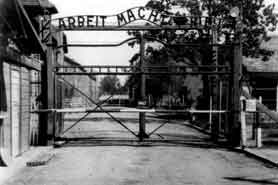
The gates of Auschwitz, with the inscription "Arbeit Macht Frei" (Work sets you free)

From the Israel Ministry of Foreign Affairs:
Holocaust Martyrs' and Heroes' Remembrance Day (Yom Hashoah in Hebrew) is a national day of commemoration in Israel, on which the six million Jews murdered in the Holocaust are memorialized. It is a solemn day, beginning at sunset on the 27th of the month of Nisan (May 1, 2011) and ending the following evening, according to the traditional Jewish custom of marking a day. Places of entertainment are closed and memorial ceremonies are held throughout the country.

The central ceremonies, in the evening and the following morning, are held at Yad Vashem and are broadcast on the television. Marking the start of the day - in the presence of the President of the State of Israel and the Prime Minister, dignitaries, survivors, children of survivors and their families, gather together with the general public to take part in the memorial ceremony at Yad Vashem in which six torches, representing the six million murdered Jews, are lit.

The following morning, the ceremony at Yad Vashem begins with the sounding of a siren for two minutes throughout the entire country. For the duration of the sounding, work is halted, people walking in the streets stop, cars pull off to the side of the road and everybody stands at silent attention in reverence to the victims of the Holocaust. Afterward, the focus of the ceremony at Yad Vashem is the laying of wreaths at the foot of the six torches, by dignitaries and the representatives of survivor groups and institutions. Other sites of remembrance in Israel, such as the Ghetto Fighters' Kibbutz and Kibbutz Yad Mordechai, also host memorial ceremonies, as do schools, military bases, municipalities and places of work.

Activities marking this day of remembrance will take place all over the world.

In Poland, people will participate in the annual "March of the Living."

From the European Jewish Post:

Some 7, 000 people are to take part in this year’s March of the Living from the brick barracks of the former Nazi German concentration camp of Auschwitz to the crematoria of Birkenau.

On 2 May young Jews from around the world will be joined by about 2, 000 Poles.

The Rabbi of Israel Meir Lau and a group of Israeli parliamentarians are expected to participate. In line with a long-standing tradition, they will be led by Holocaust survivors and the march will start with the wail of the Jewish ram’s horn, the shofar, which symbolises freedom.

The annual March of the Living was launched in 1988 and is primarily an educational project coinciding with the Holocaust Memorial Day (Yom-ha Shoah).

In 2005, the 60th anniversary of the liberation of the Auschwitz concentration camp, the event attracted 20, 000 people and official delegations from almost fifty countries.

More about Yom HaShoah.

Friday, April 29, 2011

Fall of Saigon - 36 Years Ago

Thirty-six years ago today, Saigon fell.


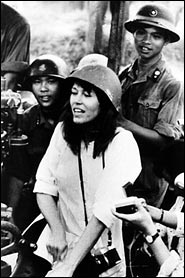
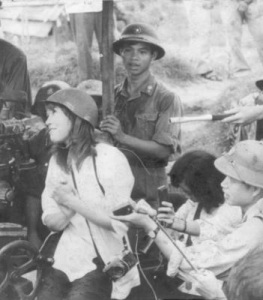
I wonder what Jane Fonda is doing to "celebrate" the anniversary.


Sunday, April 17, 2011

Ayers: John McCain is a War Criminal

Bill Ayers hasn't changed. He's still a radical and an extremist.

He hasn't abandoned his terrorist, anti-American, subversive past. His mindset is basically the same.

Last week, Ayers was on Larry Elder's radio program. Listen to Ayers, the man who gave Obama his entry into politics:


Transcript
BILL AYERS: The Weather Underground, indeed, did take responsibility for a handful, maybe a dozen, you know, extreme acts of vandalism. That's true. That's true.

And so compared to what was going on everyday in Vietnam, including the illegal bombing of cities, which John McCain took part in, and he is, of course, a war criminal, as is everyone.

As several people admitted when they came back, including the Vietnam Vets Against the War, war crimes were not a matter of choice. They were a matter of policy - bombing vast stretches of countryside because you had extra ordnance. That's what John McCain did. So he actually killed people. I actually didn't kill people.

Who's the, who's the one who should account for themselves?

Obviously, Ayers doesn't respect the veterans of the Vietnam War. He considers those Americans to be guilty of war crimes.

His efforts to overthrow the U.S. government were just acts of vandalism. He minimizes his role in plotting against America and organizing violence.

From Prairie Fire:

PRAIRIE FIRE is written to all sisters and brothers who are engaged in armed struggle against the enemy. It is written to prisoners, women's groups, collectives, study groups, workers' organizing committees, communes, GI organizers, consciousness-raising groups, veterans, community groups and revolutionaries of all kinds; to all who will read, criticize and bring its content to life in practice. It is written as an argument against those who oppose action and hold back the struggle.

PRAIRIE FIRE is based on a belief that the duty of a revolutionary is to make the revolution. This is not an abstraction. It means that revolutionaries must make a profound commitment to the future of humanity, apply our limited knowledge and experience to understand an ever-changing situation, organize the masses of people and build the fight.

Ayers calls for "armed struggle against the enemy" - America.

How can this "armed struggle" be deemed a legal war?

It's a disgrace that he paints John McCain and Vietnam vets as war criminals while considering himself to be just a vandal.

I wonder if Obama, in his heart, thinks like Ayers. I wonder if Obama agrees that John McCain and Vietnam veterans are war criminals.

We know Obama thinks Iraq is a "dumb war." Does he think Vietnam was a "dumb war," too?

We know that John Kerry, speaking on behalf of Vietnam Vets Against the War, told of war crimes committed in Vietnam.

It's so odd that Kerry wants to be considered a war hero, yet he sounded like Ayers when he testified before the Senate Committee of Foreign Relations in 1971.

According to Ayers, if you served in Vietnam, you're a war criminal. You committed atrocities in an illegal war.

He despises John McCain and Vietnam vets. He doesn't dance around the issue. He voices his anti-Americanism without hesitation.

Friday, December 7, 2007

A DATE WHICH WILL LIVE IN INFAMY


On a quiet Sunday morning December 7, 1941 a Japanese surprise air attack left the Pacific Fleet in smoldering heaps of broken, twisted steel. Here, peace was interrupted and paradise lost. In hours, 2,390 futures were stolen, half of these casualties from the battleship Arizona.

Behind the shadows of destroyed airfields, aircraft, and ships, America fought fear, and a determined enemy responding with an unrivaled war effort. An epic battle for democratic ideals and world freedom would bloody the fields of Europe and the islands of the Pacific over the next four years.


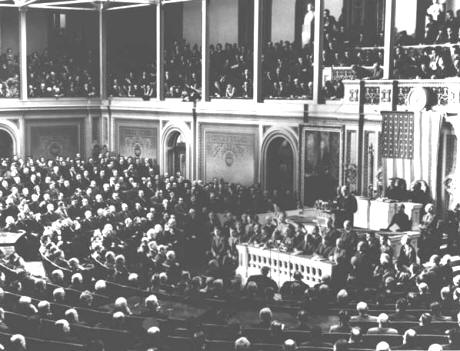
Franklin Delano Roosevelt: Pearl Harbor Address to the Nation
Mr. Vice President, Mr. Speaker, Members of the Senate, and of the House of Representatives:

Yesterday, December 7th, 1941 -- a date which will live in infamy -- the United States of America was suddenly and deliberately attacked by naval and air forces of the Empire of Japan.

The United States was at peace with that nation and, at the solicitation of Japan, was still in conversation with its government and its emperor looking toward the maintenance of peace in the Pacific.

Indeed, one hour after Japanese air squadrons had commenced bombing in the American island of Oahu, the Japanese ambassador to the United States and his colleague delivered to our Secretary of State a formal reply to a recent American message. And while this reply stated that it seemed useless to continue the existing diplomatic negotiations, it contained no threat or hint of war or of armed attack.

It will be recorded that the distance of Hawaii from Japan makes it obvious that the attack was deliberately planned many days or even weeks ago. During the intervening time, the Japanese government has deliberately sought to deceive the United States by false statements and expressions of hope for continued peace.

The attack yesterday on the Hawaiian islands has caused severe damage to American naval and military forces. I regret to tell you that very many American lives have been lost. In addition, American ships have been reported torpedoed on the high seas between San Francisco and Honolulu.

Yesterday, the Japanese government also launched an attack against Malaya.

Last night, Japanese forces attacked Hong Kong.

Last night, Japanese forces attacked Guam.

Last night, Japanese forces attacked the Philippine Islands.

Last night, the Japanese attacked Wake Island.

And this morning, the Japanese attacked Midway Island.

Japan has, therefore, undertaken a surprise offensive extending throughout the Pacific area. The facts of yesterday and today speak for themselves. The people of the United States have already formed their opinions and well understand the implications to the very life and safety of our nation.

As commander in chief of the Army and Navy, I have directed that all measures be taken for our defense. But always will our whole nation remember the character of the onslaught against us.

No matter how long it may take us to overcome this premeditated invasion, the American people in their righteous might will win through to absolute victory.

I believe that I interpret the will of the Congress and of the people when I assert that we will not only defend ourselves to the uttermost, but will make it very certain that this form of treachery shall never again endanger us.

Hostilities exist. There is no blinking at the fact that our people, our territory, and our interests are in grave danger.

With confidence in our armed forces, with the unbounding determination of our people, we will gain the inevitable triumph -- so help us God.

I ask that the Congress declare that since the unprovoked and dastardly attack by Japan on Sunday, December 7th, 1941, a state of war has existed between the United States and the Japanese empire.

Listen to FDR.
________________________________

66 years later: Survivors remember Pearl Harbor

Thursday, December 7, 2006

Pearl Harbor


On a quiet Sunday morning December 7, 1941 a Japanese surprise air attack left the Pacific Fleet in smoldering heaps of broken, twisted steel. Here, peace was interrupted and paradise lost. In hours, 2,390 futures were stolen, half of these casualties from the battleship Arizona.

Behind the shadows of destroyed airfields, aircraft, and ships, America fought fear, and a determined enemy responding with an unrivaled war effort. An epic battle for democratic ideals and world freedom would bloody the fields of Europe and the islands of the Pacific over the next four years.


Franklin Delano Roosevelt: Pearl Harbor Address to the Nation
Mr. Vice President, Mr. Speaker, Members of the Senate, and of the House of Representatives:

Yesterday, December 7th, 1941 -- a date which will live in infamy -- the United States of America was suddenly and deliberately attacked by naval and air forces of the Empire of Japan.

The United States was at peace with that nation and, at the solicitation of Japan, was still in conversation with its government and its emperor looking toward the maintenance of peace in the Pacific.

Indeed, one hour after Japanese air squadrons had commenced bombing in the American island of Oahu, the Japanese ambassador to the United States and his colleague delivered to our Secretary of State a formal reply to a recent American message. And while this reply stated that it seemed useless to continue the existing diplomatic negotiations, it contained no threat or hint of war or of armed attack.

It will be recorded that the distance of Hawaii from Japan makes it obvious that the attack was deliberately planned many days or even weeks ago. During the intervening time, the Japanese government has deliberately sought to deceive the United States by false statements and expressions of hope for continued peace.

The attack yesterday on the Hawaiian islands has caused severe damage to American naval and military forces. I regret to tell you that very many American lives have been lost. In addition, American ships have been reported torpedoed on the high seas between San Francisco and Honolulu.

Yesterday, the Japanese government also launched an attack against Malaya.

Last night, Japanese forces attacked Hong Kong.

Last night, Japanese forces attacked Guam.

Last night, Japanese forces attacked the Philippine Islands.

Last night, the Japanese attacked Wake Island.

And this morning, the Japanese attacked Midway Island.

Japan has, therefore, undertaken a surprise offensive extending throughout the Pacific area. The facts of yesterday and today speak for themselves. The people of the United States have already formed their opinions and well understand the implications to the very life and safety of our nation.

As commander in chief of the Army and Navy, I have directed that all measures be taken for our defense. But always will our whole nation remember the character of the onslaught against us.

No matter how long it may take us to overcome this premeditated invasion, the American people in their righteous might will win through to absolute victory.

I believe that I interpret the will of the Congress and of the people when I assert that we will not only defend ourselves to the uttermost, but will make it very certain that this form of treachery shall never again endanger us.

Hostilities exist. There is no blinking at the fact that our people, our territory, and our interests are in grave danger.

With confidence in our armed forces, with the unbounding determination of our people, we will gain the inevitable triumph -- so help us God.

I ask that the Congress declare that since the unprovoked and dastardly attack by Japan on Sunday, December 7th, 1941, a state of war has existed between the United States and the Japanese empire.

Listen to FDR.
________________________________

Read about Pearl Harbor survivors marking the 65th anniversary of the attack.

Read "Our Pearl Harbor" by Victor Davis Hanson.